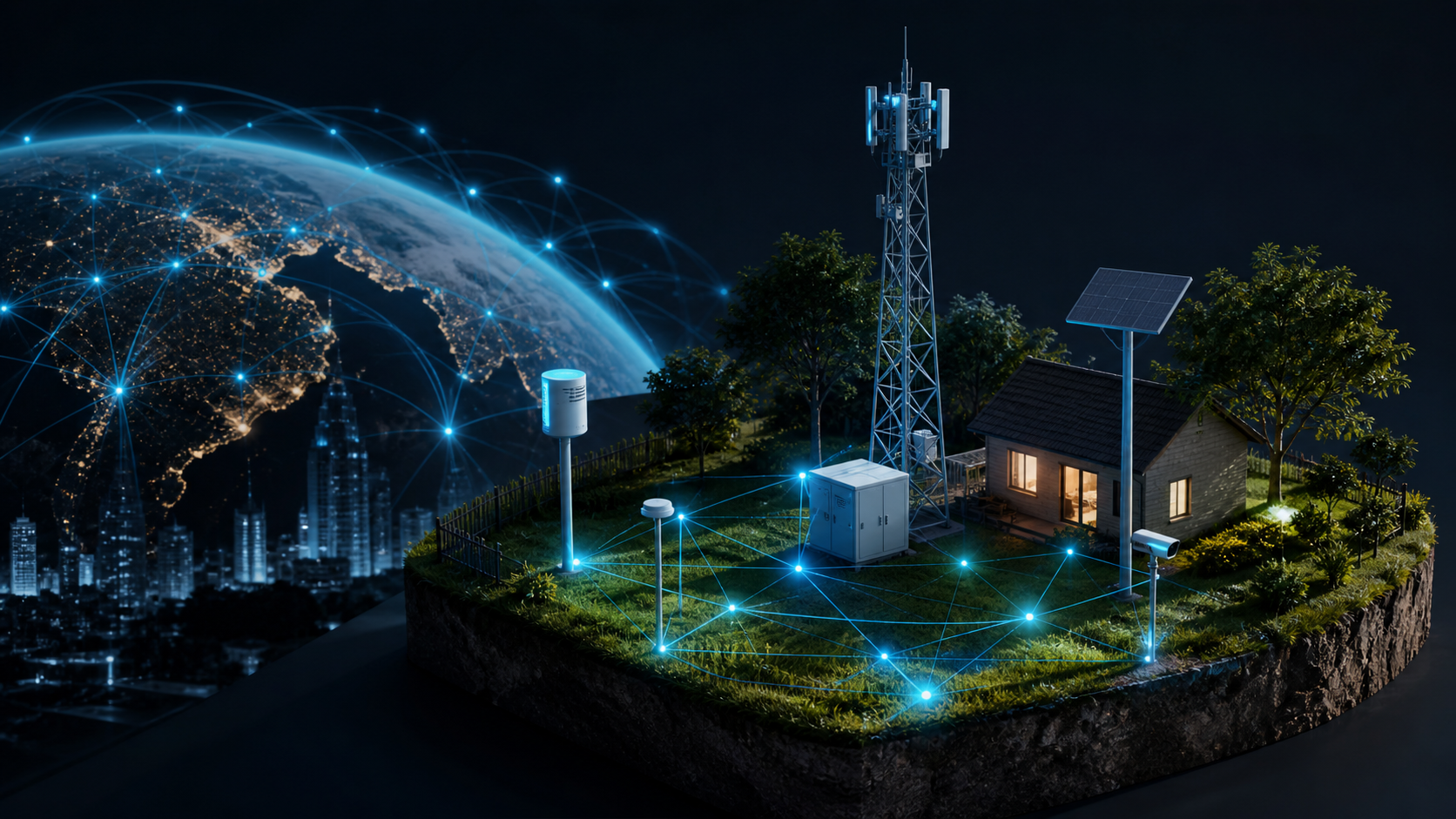
The plot was either inherited from parents or bought many years ago—for the future. The owner has long been living in the city, sometimes even in another country. Selling the land is not desirable: it’s a family asset, a connection to a native place, or simply a property that might still come in handy.
But today the plot sits idle. It still needs care, handling everyday issues, spending time and money. The land exists, takes up a space in the owner’s life, but hardly does anything for them.
And gradually the simple question arises: is it possible to keep the plot without starting construction or farming on it, yet still make it work?
Common Options: Wait, Sell, or Lease
Usually, an owner sees a few straightforward choices.
You can leave things as they are. Let the land wait for the day when the family decides to build a house, move, or use it differently. Perhaps over time, it will increase in value. For now, the plot remains a reserve for the future.
You can sell it and stop dealing with matters related to a remote property. But this option is not suitable for everyone. Sometimes the land carries family history or plans you don’t want to close completely.
There is a third way—to temporarily hand over the plot to someone who will put it to use. Someone might set up a farm, storage, parking, or another activity, and the owner receives a fee for the space use.
All these options are familiar and clear. In one case, the land waits; in another, it changes owners; in the third, it turns into a platform for someone else’s work.
If the plot can be preserved while also becoming useful, perhaps its value is not limited to traditional leasing.
Land Is More Than Just Area
Why Location Itself Can Be a Resource
We’re used to seeing a plot primarily as a territory. It has size, boundaries, location, and price. If nothing is grown or built on it, it seems incapable of producing any benefit.
However, land has other qualities.
It occupies a specific place. A physical object can be placed on it. It can provide space, a stable point of presence, and a connection to the surrounding area. Sometimes, that alone becomes the main resource.
Modern digital networks do not live only inside computers. They require physical infrastructure: devices and facilities located in specific locations that perform useful tasks—they provide connectivity, collect data, support computing, or offer another in-demand resource. We explain this model in more detail in the article “DePIN as a Business”.
Such an object needs to be physically located somewhere. It requires a suitable point on the map. And a vacant plot can turn out to be not just free land, but a place for working infrastructure.
The question now is not only: "Who can I lease my land to?" Another arises: "What useful resource can operate on my land and be part of the network?"
Not Just a Landlord: Another Role for the Owner
An Infrastructure Resource Instead of Simple Leasing
In typical leasing, the owner provides someone a place. Another person or company brings their activity, uses the plot, and pays for being there.
We explore this owner role in the DePIN Business section—here you find models where an existing physical asset becomes part of a digital demand flow or infrastructure.
The owner can see the plot as the base for a physical resource they own or manage. This resource connects to a digital network, delivers a real service, and earns rewards for useful work.
The land doesn’t turn into a separate business requiring daily management. The owner doesn’t need to become a farmer, builder, or business manager. Their profession and lifestyle may have nothing to do with what operates on the plot.
The source of value changes. Previously, income might have come from someone leasing space for their activity. Now it can be linked to the operation of the owner’s infrastructure resource.
In this picture, the plot is no longer just a backdrop for someone else’s business. It becomes a point through which the owner participates in the functioning of a larger system.
A Physical Plot Inside the Digital Economy
The word “digital” often creates a sense of something invisible and far from ordinary property. It seems that the digital economy lives in apps, on screens, and somewhere inside large data centers.
In reality, many digital systems require distributed physical resources. They must exist not in one place but across different cities, towns, and districts. Their usefulness largely depends on where exactly they are located and what kind of work they can perform there.
Therefore, an ordinary landowner can become part of digital infrastructure—not because of a special technical profession, but thanks to an already existing physical asset.
They didn’t create the plot specifically for the network. The land already exists. It used to be seen as property to preserve, sell, or lease out. Now one more option is added to the map: to use the plot as a base for a functioning resource they own.
For land to generate income, it’s not necessary to hand it over to someone else’s traditional business. It can host a piece of infrastructure owned by the owner that serves a digital network.
In this case, the person remains the landowner but no longer sees themselves solely as a landlord. They gain a new role—a proprietor of a valuable physical resource integrated into a system that spans beyond a single plot or settlement.
The Plot as an Entry Point into the Infrastructure Economy
This possibility expands the understanding of what land can actually do.
A vacant plot can be more than a future home, a family reserve, or an area for temporary rent. Its location and space can become an entry into an infrastructure economy, where physical resources belong to different people, work as part of digital networks, and receive compensation for their completed tasks.
For an owner living far away, this idea holds particular importance: the plot’s usefulness no longer depends on their constant personal presence. The land can support an operating resource even if the owner’s daily life unfolds in another city or country.
This doesn’t require immediately changing plans for the land. First, it’s enough to recognize the opportunity itself.
Until recently, the map showed only three options: wait, sell, or find a tenant. Now an additional door has opened—preserve the land and consider it a place for infrastructure that can be owned and that can work for a digital network.
The next natural question is not whether such a path exists. It’s about which physical resources can connect to networks and how ordinary owners become participants in this new system.
This question is the starting point for exploring DEPIN WORLD—a world where land, space, and other real assets can perform useful work within the digital economy.
If you want to see what real assets and equipment can be connected to such models, open DePIN World sections.