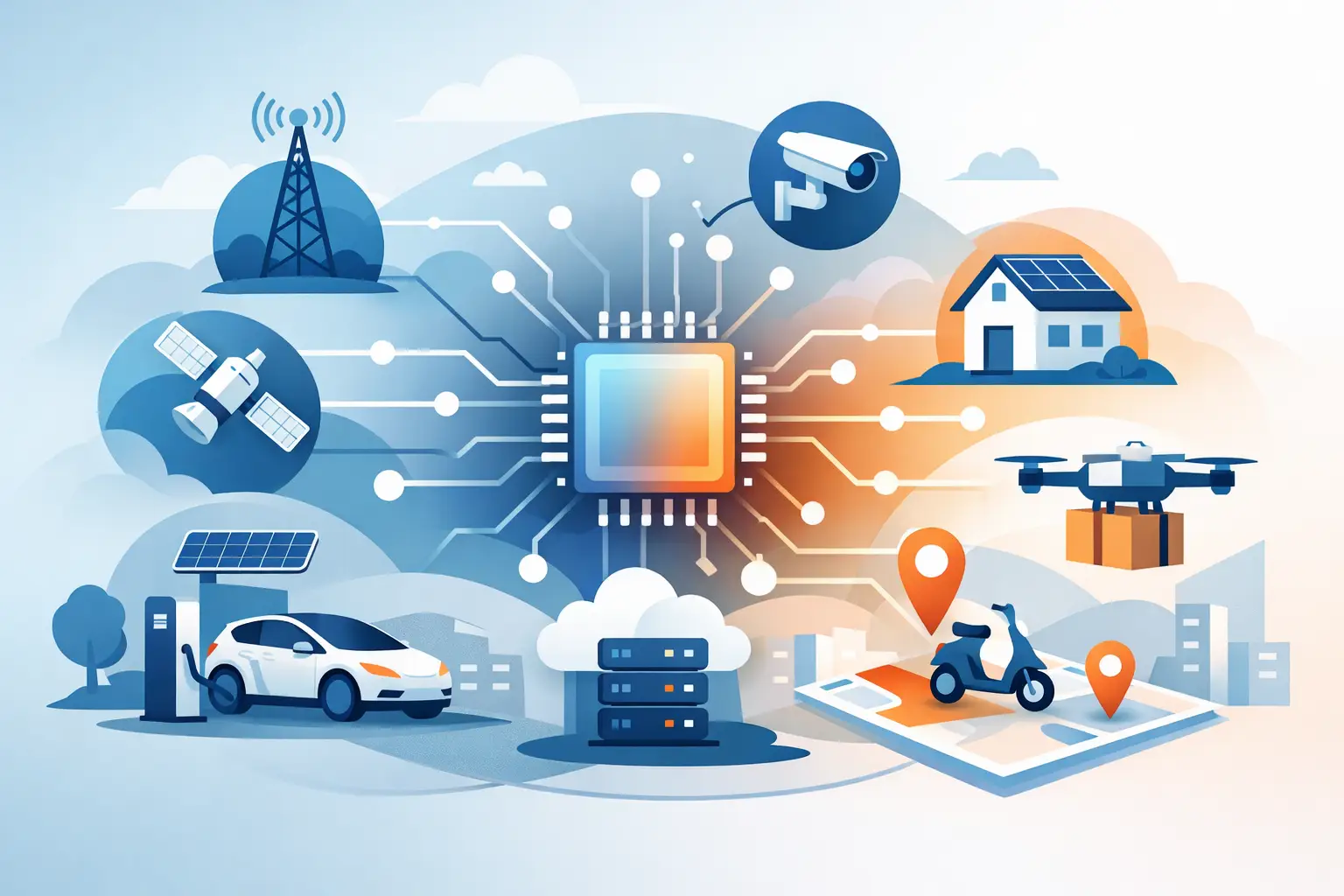
DePIN sounds more complicated than the idea itself. Decentralized Physical Infrastructure Networks are networks where physical hardware is owned by many independent owners, and the software layer combines it into a service for customers.
This could be GPUs and servers, disks, connectivity points, sensors, or energy equipment. The network coordinates who provides the resource, who needs it, how the work is measured, and how the owner gets paid.
The Main Idea — Ownership of Infrastructure
In a typical cloud, one company builds data centers, buys servers, controls customers, and keeps the margin. In DePIN, individual operators own parts of the physical infrastructure, and the network connects them into a common marketplace.
For compute, this might be GPU hours for AI, CPUs for batch jobs, storage, or rendering. The machine remains yours. The network helps make it available, measurable, and payable.
How a DePIN Network Works
There are four main elements: the hardware owner, the client, the network software, and the settlement mechanism. The operator connects compatible hardware and meets technical requirements. The client requests the resource. The network matches demand with suitable capacity, verifies the completed work, and settles with the provider.
Blockchain can be used for settlement, incentives, and rule verification, but it is not the service itself. The service is the useful infrastructure.
Why DePIN is Not Just New Mining
In proof-of-work mining, computations primarily secure the blockchain and earn protocol rewards. In DePIN, useful work happens off-chain: a GPU performs an AI task, a server runs an application, a storage node holds data needed by the client.
Therefore, a serious operator cares about more than just token price. They ask: who buys capacity, how stable is the demand, and what load remains after incentive rewards end.
A detailed comparison of these models can be found in the article DePIN vs. Crypto Mining.
Types of DePIN
Compute networks combine GPUs, CPUs, and servers for AI, rendering, and cloud workloads. Storage networks use distributed disks. Wireless networks sell coverage and bandwidth. There are also sensor, mapping, and energy networks.
For owners of computing hardware, compute often offers the most understandable entry point: server specs can be measured, and its capacity can be sold. But the machine must fit the specific workload.
Revenue Does Not Mean Profit Yet
From server earnings, you must subtract electricity, cooling, internet, hosting, depreciation, repairs, fees, and downtime. The key metric is utilization. An expensive GPU without paid tasks remains an expensive GPU.
Before buying new equipment, it makes sense to first calculate the configuration with the DePIN World calculator or check existing hardware through DePIN Lite.
What Distinguishes an Operator from Just a Box Owner
Commercial infrastructure requires monitoring, remote access, alerting, security, failure recovery, and expense accounting. To connect to networks, you need a clear operating layer, not just a powerful graphics card.
DePIN does not eliminate risk. Rewards, demand, platform rules, and hardware prices change. That’s why DePIN World’s approach is simple: know the asset, know the expenses, understand the buyer, and only then expand capacity.
DePIN is not a promise of passive income. It’s an opportunity to own a productive part of digital infrastructure and get paid for the actual service provided.
1 комментарий к “What is DePIN in Simple Terms: A Practical Explanation”