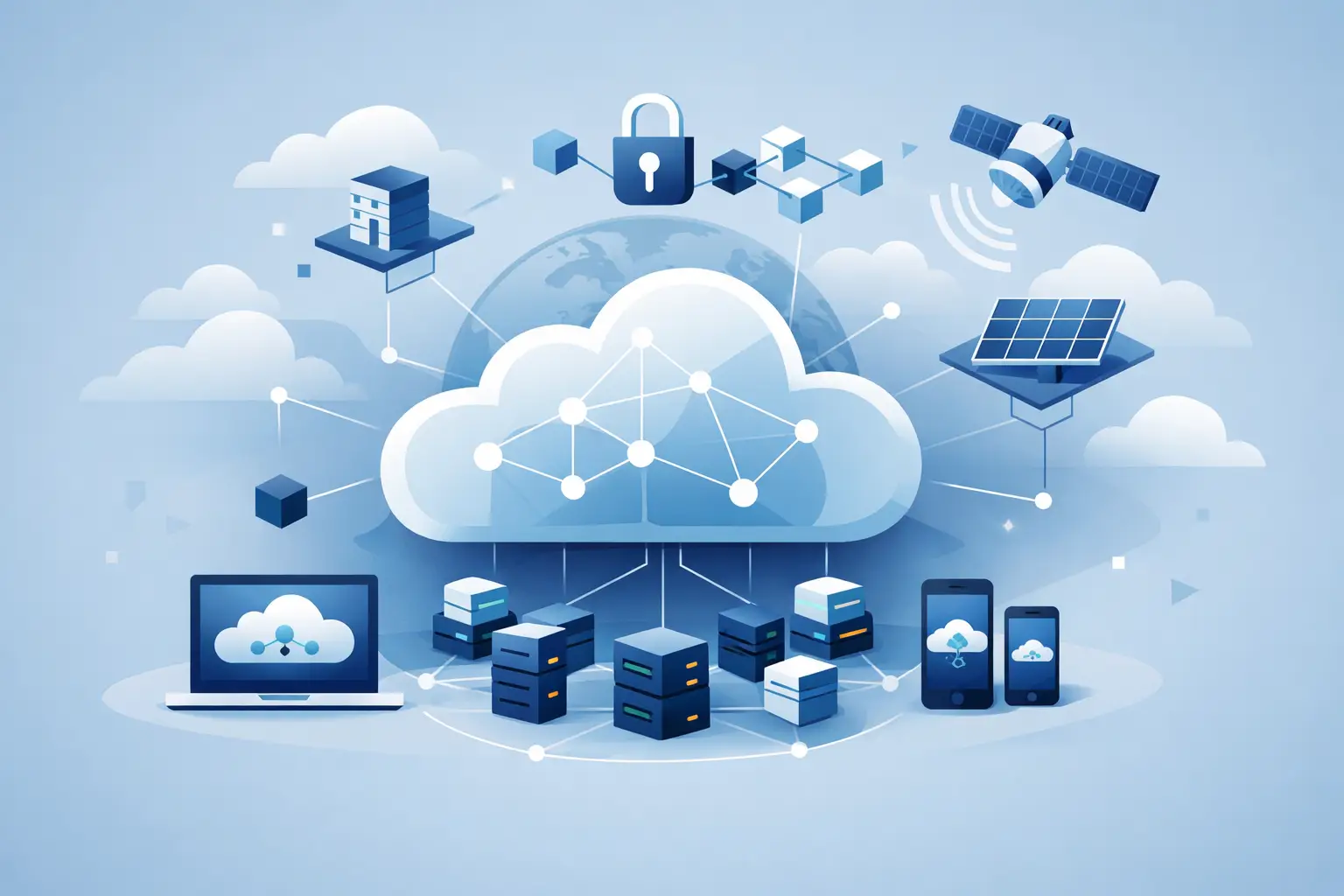
An idle GPU in a rack is not an investment, but an underutilized asset. Decentralized cloud solves a practical problem: it connects independent computing hardware with clients who need power, without handing over all the equipment to a single hyperscaler.
This is not mining under a new name. Here, the server performs useful work: AI inference and training, rendering, data processing, containerized applications, storage, and other computational tasks.
What it looks like in practice
The client specifies the required resources: GPU model, CPU, RAM, storage, region, duration, and acceptable price. The network finds a suitable node and dispatches the task there.
On the operator’s machine, an isolated environment is created — a container, virtual machine, bare metal, or specialized AI runtime. The client interacts with it via the platform interface, API, or a remote access point.
The operator gets paid only when their resource is actually used. Therefore, the economics depend not on simply having the server turned on, but on utilization, rates, uptime, and expenses.
Four layers of decentralized cloud
1. Physical hardware
GPU, CPU, servers, drives, switches, internet, power, and cooling. Someone has to buy, install, and maintain all this. The white paper doesn’t compute.
2. Marketplace and orchestration
The software layer sees available machines and matches them to client requirements. For AI, VRAM and drivers may be decisive; for a web service, CPU, network, and uptime; for rendering, cost and execution speed.
3. Trust and verification
The client needs proof that the claimed hardware exists and works. So networks use benchmarks, health checks, reputations, attestations, and other verification mechanisms.
4. Settlement
The system records who provided the resource, how much it was used, and how much the operator should receive. In some networks, settlement goes through stablecoins; in others, via native tokens or hybrid models.
Why clients might need distributed power
Centralized clouds are strong in scale and mature tools. But they concentrate prices, quotas, accounts, and infrastructure access within a few companies.
A distributed network adds alternative offerings from independent data centers, small operators, and private server rooms. This is especially interesting when certain GPUs are scarce, when different geography is needed, or when there’s a desire not to depend on a single provider.
Not every task fits a distributed architecture. Dense multi-GPU training with extremely low latency might be better suited to a specialized cluster. But inference, rendering, and flexible GPU renting often distribute much more easily.
What remains the operator’s responsibility
Decentralization doesn’t fix fans or pay the electricity bills. The node owner is responsible for hardware, cooling, internet, security, and updates.
It’s especially important to measure utilization. A rate of two dollars per GPU hour can’t simply be multiplied by 24 hours and 30 days. The machine earns only when the market actually assigns it paying tasks.
Before buying a server, you can check this economics in the DePIN World calculator and then compare the estimate with the actual conditions of the chosen network.
Decentralized doesn’t mean uncontrolled
A good network sets requirements for uptime, security, software versions, and performance. In return, the operator gains a demand channel without having to find every client themselves.
If you want to see how individual networks fit into the overall system, start with the Guide to DePIN World. The main idea is simple: the future of distributed computing is built not by tokens, but by machines that remain available, useful, and economically viable.