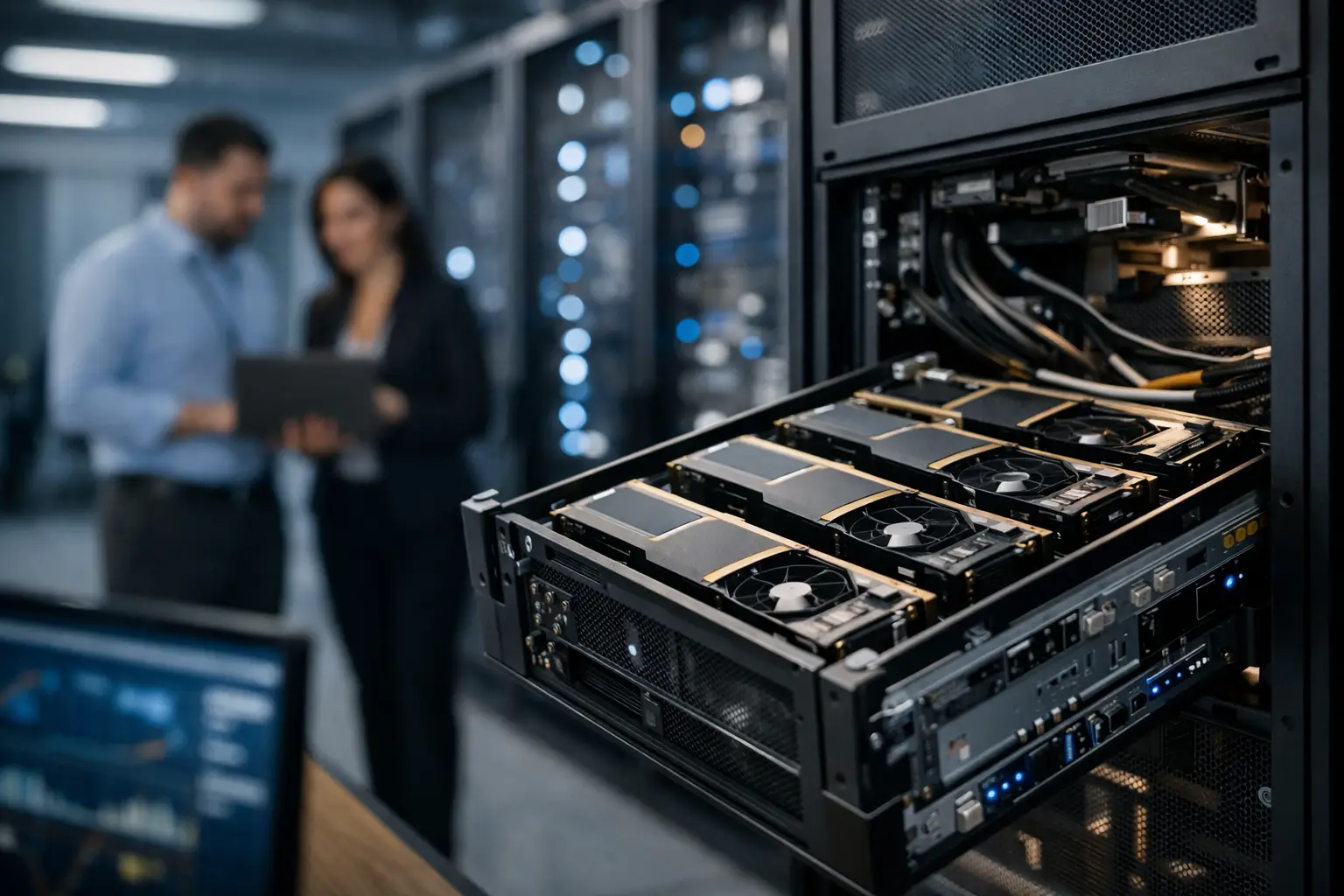
An expensive GPU that sits idle most of the time doesn’t earn money — it just depreciates. GPU hosting changes the role of a graphics card: from purchased hardware it becomes a productive asset performing paid work.
AI inference, model training, 3D rendering, video processing, simulations, and distributed cloud tasks require accelerated computing. The operator’s opportunity lies not in simply owning cards, but in providing a stable and measurable computing service.
What is GPU Hosting
A client remotely accesses a GPU, runs a task, and pays for the used or reserved power. The operator owns the hardware, provides power, networking, cooling, and availability, and earns income when the equipment is utilized.
This is closer to server rental than classic mining. Revenue depends on demand for useful computation, not just on the price of a single token and network difficulty.
Why Demand Goes Beyond the Big Clouds
Hyperscalers remain key providers, but their GPUs aren't always available, and the final cost can rise significantly due to traffic, storage, and additional services. Distributed networks pool resources from independent owners, offering customers more options in price, geography, and hardware class.
For a hardware owner, DePIN can become a channel to the market without the need for a global sales department. But decentralization doesn’t eliminate client requirements: uptime, performance, a secure environment, and proper operation are mandatory.
The Economics of GPU Hosting
The hourly rate is not the same as profit. Load is more important. A card with a high rental price that sits idle most of the month can earn less than a cheaper card that is constantly in demand.
The model includes equipment purchase, electricity, cooling, internet, fees, repairs, labor, and depreciation. A graphics card ages both technically and economically, so capital recovery cannot be ignored in the calculations.
Operating margin = revenue from computations minus all operating costs and capital recovery.
Before buying, it’s convenient to compare options with the DePIN World server calculator, using not the maximum advertised load but several realistic scenarios.
Buy GPUs Based on Demand, Not Hype
Consumer RTX cards can provide excellent performance per dollar for rendering and some inference tasks. Professional cards excel where large VRAM, virtualization, stability, and prolonged continuous load are needed.
GPUs cannot be considered separately from the server. PCIe lanes, CPU, RAM, NVMe, network, and cooling determine the real performance of the entire machine. The practical part of assembly is covered in the GPU integration section.
GPU Hosting is Operation
After purchase, the real work begins: remote management, temperature and power monitoring, secure access, automatic restarts, notifications, and documented recovery.
A home setup is suitable for first experience but quickly hits limits of electrical capacity, noise, heat, and internet quality. A larger system requires a prepared room or colocation. Scaling prematurely is expensive, but staying amateur too long limits reliability.
Network and security should be designed along with the hardware. There is a dedicated network and security section in the knowledge base for this.
The Main Pitfall is Counting 24 Hours of Rent per Day
GPU hosting is not guaranteed passive income. Demand changes, platforms change rules, new generations of cards put pressure on the price of the old, and an outage can stop revenue.
Therefore, estimate low, expected, and high loads. If a project only pays off with perfect occupancy, it is too fragile.
Prove One Machine First — Then Buy a Rack
The best first step is one machine or a small cluster where you can measure actual load, power consumption, types of tasks, failures, and net revenue. Only after that does the data justify the next purchase.
The DePIN World guide links economic calculations, equipment choice, and infrastructure preparation into one sequence. In GPU hosting, the winner is not the one with the most GPUs, but the one who knows how to turn each of them into a reliably operating commercial resource.