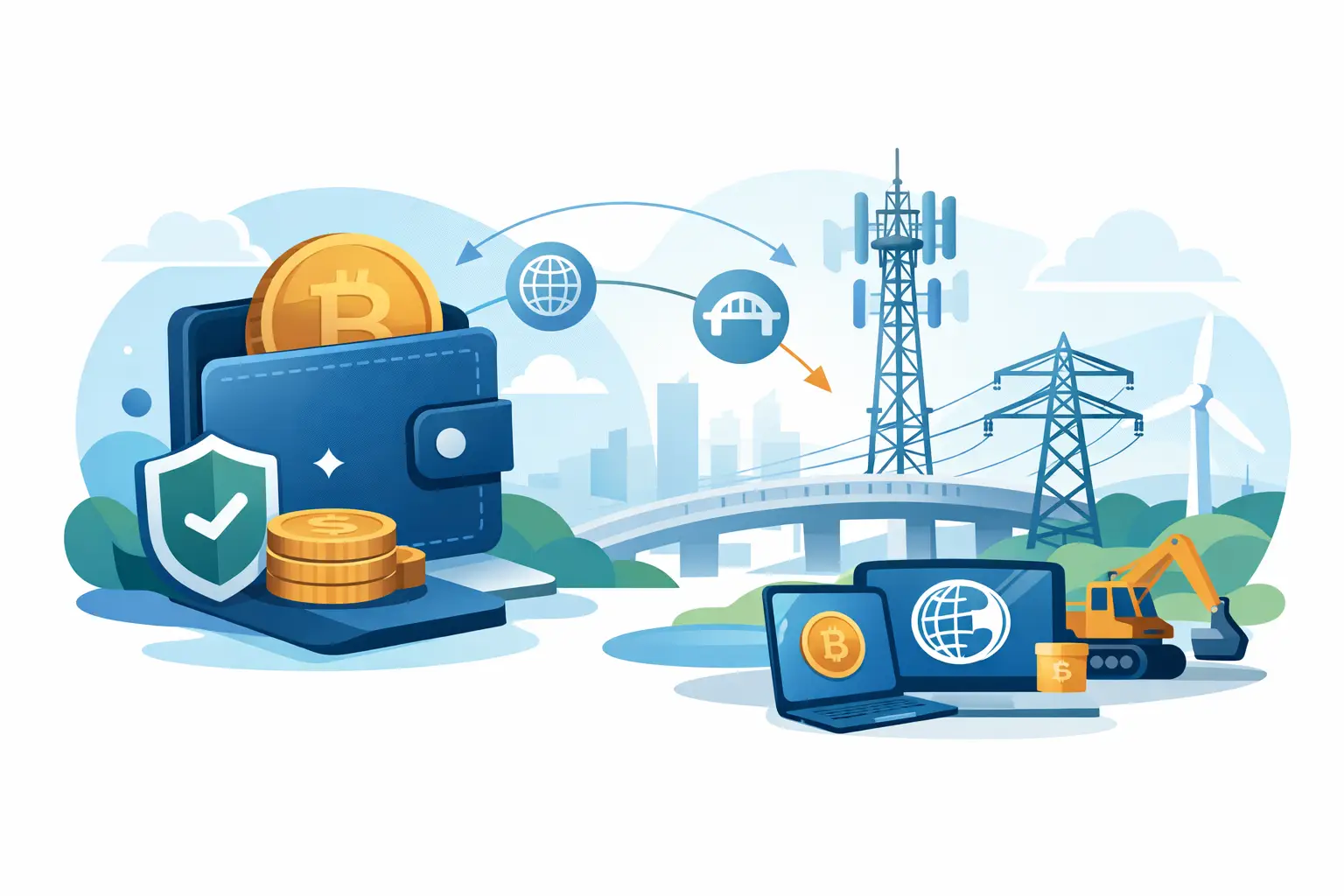
An operator can complete a GPU task for a client on the other side of the world in a few hours – then wait several days for a bank transfer. International settlements add fees, currency conversion, banking hours, and intermediaries. For global computing infrastructure, this is a real operational constraint.
Crypto payments don’t generate profit by themselves. Their advantage lies elsewhere: they allow the settlement layer to operate as globally as the servers and digital tasks themselves.
Why traditional settlement doesn’t always align with the nature of compute
AI teams, studios, developers, and server owners can be located in different countries. Computing power is needed immediately, while classic banking infrastructure still depends on regions, schedules, and correspondent chains.
For a small operator, revenue delay affects very tangible things: paying for electricity, colocation, buying components, and the ability to quickly restore a failed server.
Digital assets enable value transfer 24/7 directly between participants. Stablecoins are especially practical: they maintain dollar-based pricing logic without adding extra volatility to operating margins.
Payment method — part of the business operating system
Settlements affect rates, client access, treasury, accounting, and scaling speed. In DePIN, payments are often linked to actual usage: GPU hours, completed tasks, data transferred, or uptime.
Digital rails allow clients to top up balances in advance, networks to distribute rewards for verified work, and operators to receive settlement for tasks or periods. But the payment scheme should follow the business model, not trends.
For a large corporate contract, a bank account may remain the ideal option. For frequent international micropayments, on-chain settlement is sometimes much more convenient. Good infrastructure supports multiple paths rather than turning one into an ideology.
Stablecoins reduce unnecessary currency risk
Electricity, servers, and spare parts have specific costs. If revenue over a few hours changes by tens of percent due to token price movements, the operator takes on additional risk unrelated to the quality of their infrastructure.
Therefore, stablecoins are often more practical for operational turnover than volatile assets. This requires a predefined treasury policy: which portion is kept for expenses, which is converted, and how much can consciously be held in other assets.
Speed of settlement doesn’t eliminate control
Self-custody provides direct control over funds but also places responsibility on the owner. Lost keys or wallet compromise can destroy the benefits of fast payment.
Client payments, business reserves, and daily expenses should be reasonably separated. Addresses must be verified through a trusted channel, transactions documented, and large transfers protected by additional confirmation.
Network choice should also be pragmatic: fees, liquidity, speed, client support, and accounting convenience are more important than slogans about the «best chain».
Accounting and legal compliance remain part of the business
Cross-border settlements do not waive tax, contract, or other requirements of specific jurisdictions. Operators need records of received amounts, payment time, corresponding orders, and subsequent transfers or conversions.
Requirements vary by country and business type, so legal and tax matters must be verified according to one’s jurisdiction. Decentralization is useful precisely when it enhances business resilience rather than creating chaos in documentation.
The main idea — control over the entire economic chain
In traditional cloud, one large company can control the server, rates, billing, and customer relationships. DePIN offers a different architecture: the operator owns physical equipment, the distributed network drives demand, and digital settlement can close the economic loop between client and capacity owner.
On DePIN World itself, this logic is already practically used: the site applies a crypto payment gateway for access to paid products, so digital settlement for us is not an abstract theory, but part of the project’s working infrastructure.
If you want to see the overall model — from own equipment to markets and the economics of its operation — start with Guide to DePIN World. The point is not to replace all banks. The point is for the computing capacity owner to have more than one way to get paid for actually performed work.