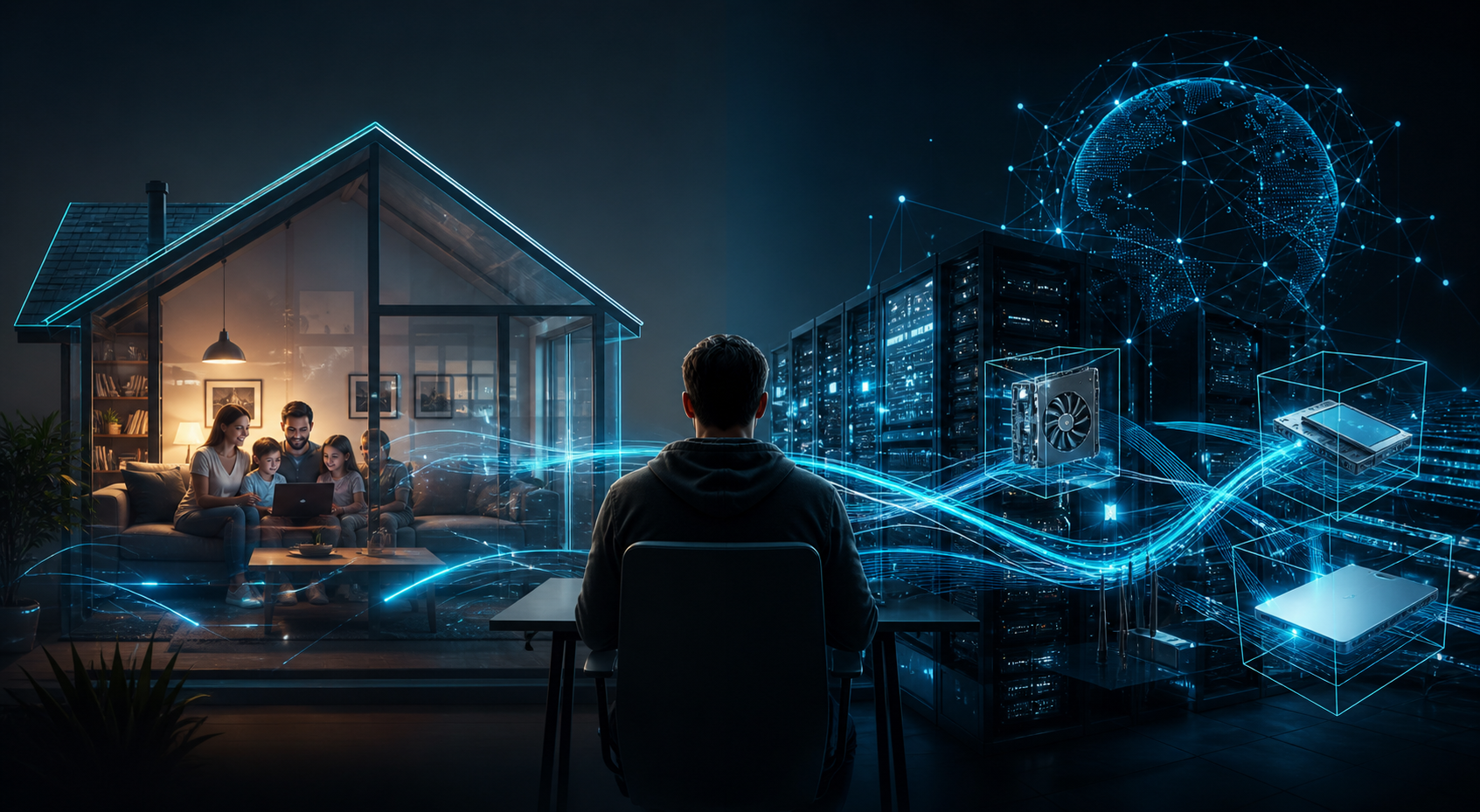
Remote Work Gave Freedom to Move. But Not the Right to Stay
The home is already settled. The kids are used to the new school. There’s a favorite coffee shop, familiar neighbors, and a route for evening walks. Life is finally happening where you truly want to live.
It seemed that along with the laptop and paycheck, freedom was moved too.
Then comes the letter from the employer: you need to be in the office more often. Or live only in a certain region. Or move back closer to the business center.
And suddenly it turns out: the job was remote, but the right to choose where to live still depended on someone else’s decision.
When the Address Becomes Part of the Job Again
Moving is not just changing a point on the map. A person sets up a home, enrolls children in school, finds doctors, makes friends, and gradually puts down roots.
So the demand to return to the office affects much more than just the work schedule. It forces a family to rethink where to live, how much time to spend commuting, and whether long-term plans are possible.
Remote work gave the feeling that the position was no longer tied to a city. But as long as that freedom depends on one company’s rules, it remains conditional.
The main loss here is not the home office or the flexible schedule. What’s at risk is control over one’s own life.
Usual Options Exist. But the Principle Remains the Same
You can return to the office. You can negotiate with your manager. You can find another remote job, switch to freelancing, gather several clients, or build your own online business.
All these options are real, and for many one of them will be the right solution. But they have one thing in common: income mainly comes from selling your own time, knowledge, and attention.
The employer, client, or contract format changes, but the dependence on constantly selling your own hours remains.
What if the map of opportunities doesn’t end there?
Not Just Working, But Owning
You can ask a different question: what can a person own themselves so that value is created not just by every additional hour of work?
When Your Resource Contributes to Creating Value
In the traditional economy, this principle is well understood. Someone owns a workshop or production equipment, machinery, warehouse, or another useful resource. Value creation involves not only their personal labor but also what belongs to them.
The digital economy also needs infrastructure. Online services and networks require real resources: computing, data storage, communication channels, and other capacities.
Parts of such infrastructure don’t have to be owned only by large companies. Individuals can provide owned resources to a broader digital system and receive rewards for their useful contribution.
This is no longer just a new job or another client. It’s a different type of participation: you own a part of a working infrastructure.
A Resource That Works Alongside You
The essence of this model is simple: a person has a physical or computational resource, it is connected to a system and performs useful tasks for it.
How This Differs from Remote Work
With remote work, a person earns money for their labor via the internet. In freelancing, they sell that labor to several clients. In their own business, they organize work and find customers.
Here, a person’s owned resource participates in generating income.
This is not a promise to replace a salary or magical passive income. The point is different: part of economic independence can rely on what a person owns and manages themselves.
You can start without a major decision—first see what existing resources can be utilized at all.
Freedom of Place Is Not Just a Portable Position
Remote work let people choose a city and home not just by distance to the office. But a portable position doesn’t yet mean full control over the geography of one's life.
Owning useful infrastructure adds another option: not only looking for jobs you’re allowed to do from home but also participating in the digital economy through your own resource.
You can not only move your job from place to place — you can own a resource that does useful work itself.
Then the original question changes. Instead of “which company will let me stay?” there’s another: “What part of my income can rely on what I own?”
Another Door on the Map
Finding a new employer is not the only way to make income less dependent on the office radius.
There is a whole world of models where ordinary people own physical and digital resources, connect them to large networks, and participate in creating useful infrastructure.
DePIN World is a place where this world becomes understandable without needing to master the technologies in advance.