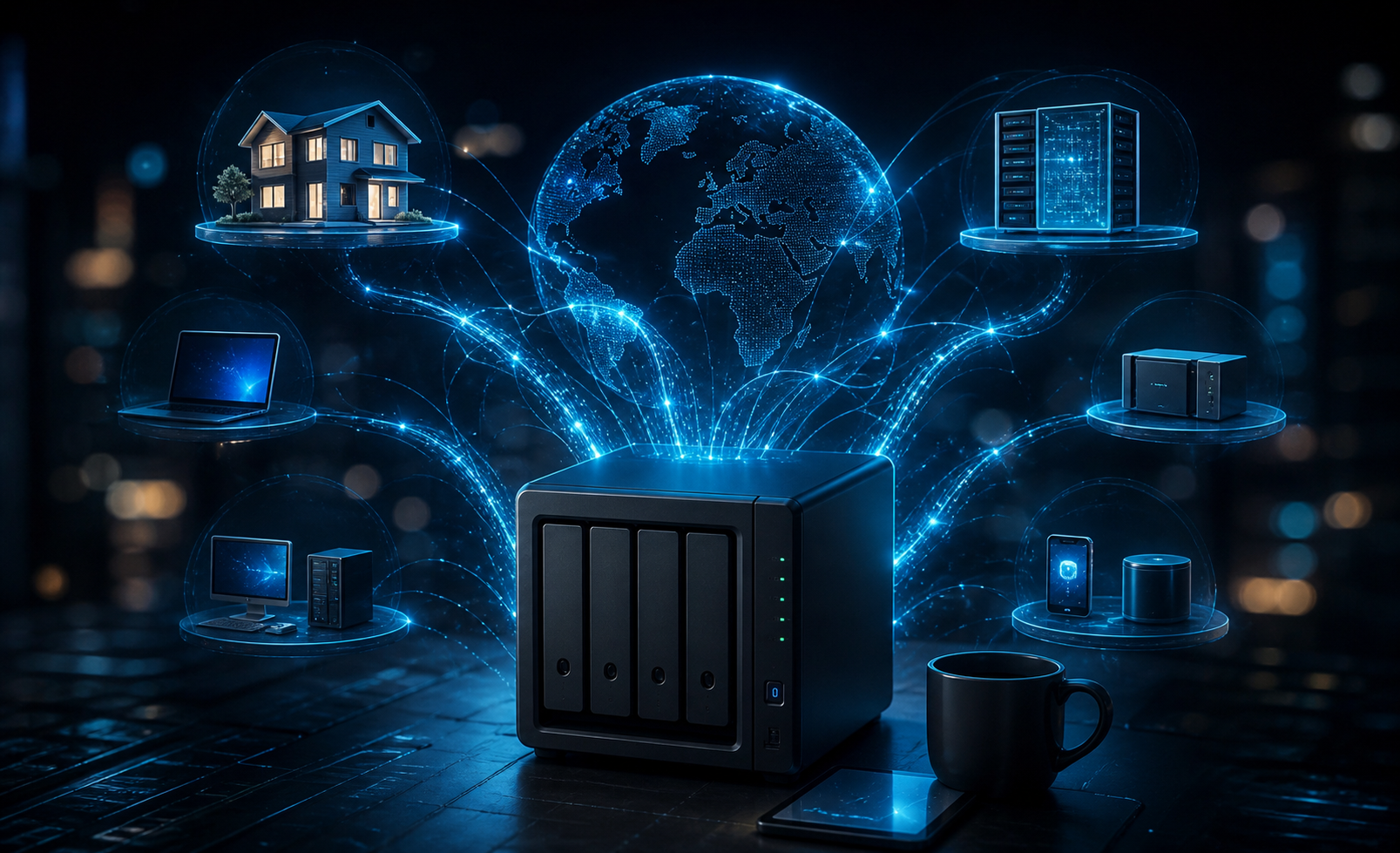
Home storage is usually purchased with extra space. For family photos, backups, movies, music, and documents. It seems like the space will run out quickly, so it’s better to get a larger drive right away.
A year or two passes. The archives are in place, the media library works, backups are saved — yet a significant portion of the paid terabytes remain unused. The device is on, connected to the internet, and sits on the shelf. The resource exists, but does almost nothing.
Usually, this is not seen as a big problem. Free space can be saved for the future. An unused drive can be put away in a closet or sold after the next tech upgrade. But there’s another option: to provide free capacity to a distributed storage network and earn rewards for its valuable work.
Space was bought for yourself — and a bit overestimated
It’s easy to overestimate the amount of home disks. When it comes to important files, having extra space seems reasonable. No one wants to suddenly discover there’s not enough room for new photos or another backup.
This is how NAS systems appear at home — dedicated network storage devices, media servers, and simply several large drives. Sometimes they’re used regularly, but far from their full capacity. Sometimes after upgrades, old drives remain that still work fine, but no longer have a role.
The money has already been spent on this capacity. It belongs to the person and is nearby. The device itself may work most of the time, but several terabytes remain untouched for months or even years.
Until recently, the choice seemed simple: keep the space in reserve, sell the extra, or leave things unchanged. All these decisions make sense. But they come from the traditional view of a drive solely as personal file storage.
But what if you looked at it differently?
A terabyte is not just space for future photos
Free capacity seems like something abstract. Until there are files on the disk, it feels like there’s no real resource — just an empty space waiting to be filled someday.
In reality, it’s already an existing digital opportunity. The disk can store data regardless of who owns it or what it’s needed for. So free space can be seen not just as a household reserve, but as part of a storage infrastructure.
Usually, this kind of infrastructure is associated with large buildings, equipment racks, and professional companies. Naturally, one thinks that to provide data space for others, you need to build your own data center, hire specialists, and turn it into a separate business.
But digital storage can be organized differently.
There are distributed networks that require the capacity of many independent owners. Rather than gathering all resources in one location, such networks pool available space across different devices.
And here free terabytes at home start to look quite different.
Storage can become part of a large network
Imagine that part of the space on an already running home storage device is provided to an external network. The drives remain yours and continue handling familiar tasks. But the free capacity no longer awaits an indefinite future — it participates in data storage and earns rewards.
The main discovery isn’t only the possibility of earning an additional income source. More importantly, it’s about how participation begins.
You don’t have to buy new equipment first. You don’t need to turn your home into a professional data center or learn a new profession. A useful digital resource can be what you’ve already bought, connected, and have nearby.
Just yesterday, several free terabytes looked like ordinary reserve space. Today, you can see it as a part of digital infrastructure that belongs to you.
It’s a small shift in perspective, but it noticeably expands the usual map of opportunities. Income is usually tied to active work: fulfilling orders, providing services, creating products, or spending extra time. Here, the useful work is done by a resource you already have — free storage space.
At the same time, a home disk stops being just a consumer item. It becomes an asset that can participate in the operation of a larger system.
From a storage buyer to its owner
We’re used to paying for digital infrastructure. We buy drives, pay for file space, use services, and see storage as a service provided to us.
The distributed model allows you to take a different position. An ordinary person can be not only a consumer of digital storage, but an owner of a small part of the infrastructure that provides this storage.
This transition doesn’t require starting from scratch. Its starting point can be a home NAS, media server, or a working drive left after an upgrade. What was once considered excess gets a new role.
This is the broader change. Physical resources owned by ordinary people can be combined via digital networks and accomplish a common task. Each individual contribution may be small, but together they create a functioning infrastructure.
Free capacity is one of the most understandable examples. You can literally see it in your disk information: so much space is used, so much is available. Usually, this number only means more room for personal files. But it can also mean the ability to provide part of the resource to the network.
Thus, participation in the digital economy sometimes starts not with launching a business or a new purchase. Sometimes it’s enough to look anew at what already stands at home.
A new role for familiar things
Of course, family archives and backups remain important tasks for home storage. The new opportunity doesn’t cancel its original purpose. It adds another role for the part of the resource that isn’t currently used.
This is the main idea: already paid-for digital capacity doesn’t have to just wait its turn. It can perform useful work on a distributed network and generate a separate stream of rewards.
Thus, drives left around by chance turn into something more than just equipment on a shelf. They become a small piece of infrastructure owned by the user.
Behind this idea lies a whole world where owners of physical resources participate in the operation of digital networks. Data storage is just one of its understandable entry points. The next step is to see how this model works and which familiar resources can gain a new role.
That’s exactly why DEPIN WORLD exists: to continue exploring a world where digital infrastructure can begin with things already owned by ordinary people.
Check out what existing equipment you can use in DePIN: a computer, free storage, or a 3D printer.