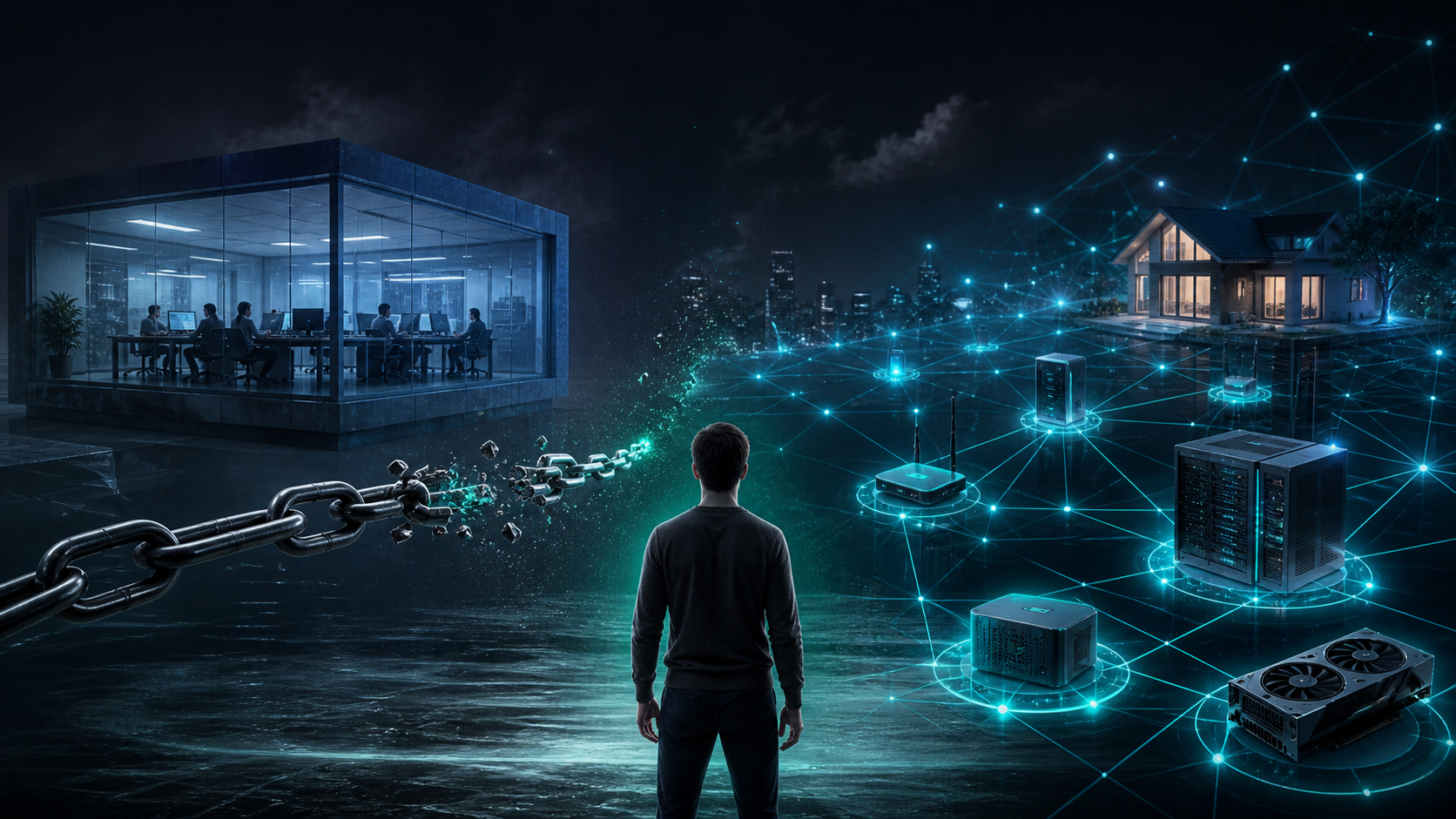
Working from Home Doesn’t Necessarily Mean Owning Your Freedom
A few years ago, remote work made possible something that once seemed too difficult: choosing a city to live in, rather than just to work in an office.
A home was established. The kids started school. A spouse found a job nearby. Familiar routes, family routines, and connections with the new place took shape. The workday still began in the morning, but it no longer dictated exactly where the rest of life had to happen.
Then came the message: it’s time to return to the office.
And it turned out that this wasn’t just about a new work routine. One company decision could affect everything a person had built around the promise of remote work.
The home belongs to you, but remote work does not
When someone buys a home, sets up a household, and ties their family to a specific place, this choice feels solid. But the economic foundation of that choice can be surprisingly fragile.
The home belongs to the person. Their daily life is arranged by themselves. However, the ability to earn money from that home has always depended on the employer’s rules.
As long as the company allowed remote work, this went almost unnoticed. Geographic freedom appeared to be a natural part of the new life. But the requirement to return to the office revealed that this freedom was not a possession—it was a condition of the agreement. It was granted—and it can be revoked.
This doesn’t make the previous choice a mistake. Remote work truly gave millions of people more options. It’s just that now its limits have become clear: the final word on where to work often remains with whoever pays the salary.
Familiar paths lead down well-known roads
The first reaction in this situation is understandable: try to negotiate.
You can discuss a hybrid model, come to the office only on certain days, or ask for special permission to stay home. You can endure a long commute. You can start looking for the next fully remote position.
Other options exist as well. For example, switching to freelance, working directly with clients, or distributing income among several clients so you don’t depend on a single company.
Each of these paths can make sense. They allow you to shape your relationship with work differently and retain more control over your life.
But they share a common foundation: income still comes from selling your time, knowledge, and attention. The buyer of that time changes—employer, several companies, or private clients. Agreements and schedules change. But the logic remains the same.
To earn money, you still need to find someone willing to buy your work on acceptable terms. And when conditions change, geographic freedom must be protected all over again.
But what if personal labor isn’t the only thing that can generate a separate income stream?
What if not only the person works, but also a resource they own?
The digital economy is usually visible to us from two perspectives.
On the one hand, we work within it: holding meetings, writing texts and programs, creating projects, serving clients. On the other hand, we use its results: communications, online services, data storage, and computing power.
Behind all this is infrastructure. Digital services need real resources: equipment, computing capacity, storage space, connectivity, devices that collect or transmit useful data.
We usually imagine such infrastructure as owned by large companies. They buy equipment, host it, and provide services to everyone else.
But there is also another model. In this model, some useful physical or computational resources belong to ordinary people. These resources connect to digital networks, perform the work needed, and their owners are rewarded for the value they provide.
This is exactly where an additional door opens.
To become less dependent on one employer’s decision, you don’t have to only look for a new company that allows working from home. You can gradually create another economic foundation—owning a useful resource that participates in the digital economy.
Not just another job, but a different role
The key to this idea is not a promise to quit your profession or immediately replace your salary.
It’s about a different role.
You can remain an employee, a specialist, or an entrepreneur. But alongside this, you can also be the owner of a small part of the working infrastructure.
In regular work, income mostly depends on personal involvement: completing tasks, responding to clients, meeting deadlines, attending meetings. In an infrastructure model, value is created by a resource owned by the person, which provides a specific useful function to the network.
This isn’t just another boss or client you have to sell your free evenings to. Here, the economy involves not only your time, but also what you own.
This perspective significantly expands the usual map of opportunities. Alongside employment, remote jobs, freelancing, and owning a business, a new class of participation appears: providing valuable resources to the digital environment and earning a separate income stream for their work.
Not instead of your main activity, but alongside it.
From conditional freedom to an asset you can truly own
The demand to return to the office is unpleasant not only because of the commute or schedule change. It reveals a deeper dependence: the place where you live was chosen by you, but the economic right to stay there actually belongs to the company.
The next step doesn’t have to be finding a new employer and getting the same permission all over again. You can ask another question: what part of my income over time could be based on a resource I own?
The digital economy allows you to be not only an employee and a user. In some of its models, a person can own a small part of the infrastructure and offer it to others—without having to sell an additional hour of their own time every time.
This way, geographic freedom gains another foundation. Not guaranteed by a particular job or granted by corporate policy, but connected to what is personally owned and benefits the digital network.
The new door is already open
This idea doesn’t require you to change your profession or overhaul your life right now. To start, it’s enough just to see the opportunity.
Alongside traditional options—negotiating, changing employers, or freelancing—there’s an additional option: gradually building income around a resource you own that can operate within digital infrastructure.
DEPIN WORLD is a place to explore this opportunity. Here you can clearly see the types of infrastructure owned by ordinary people and understand how participation works.
Once you know that such a door exists, it’s natural to want to see what’s behind it.