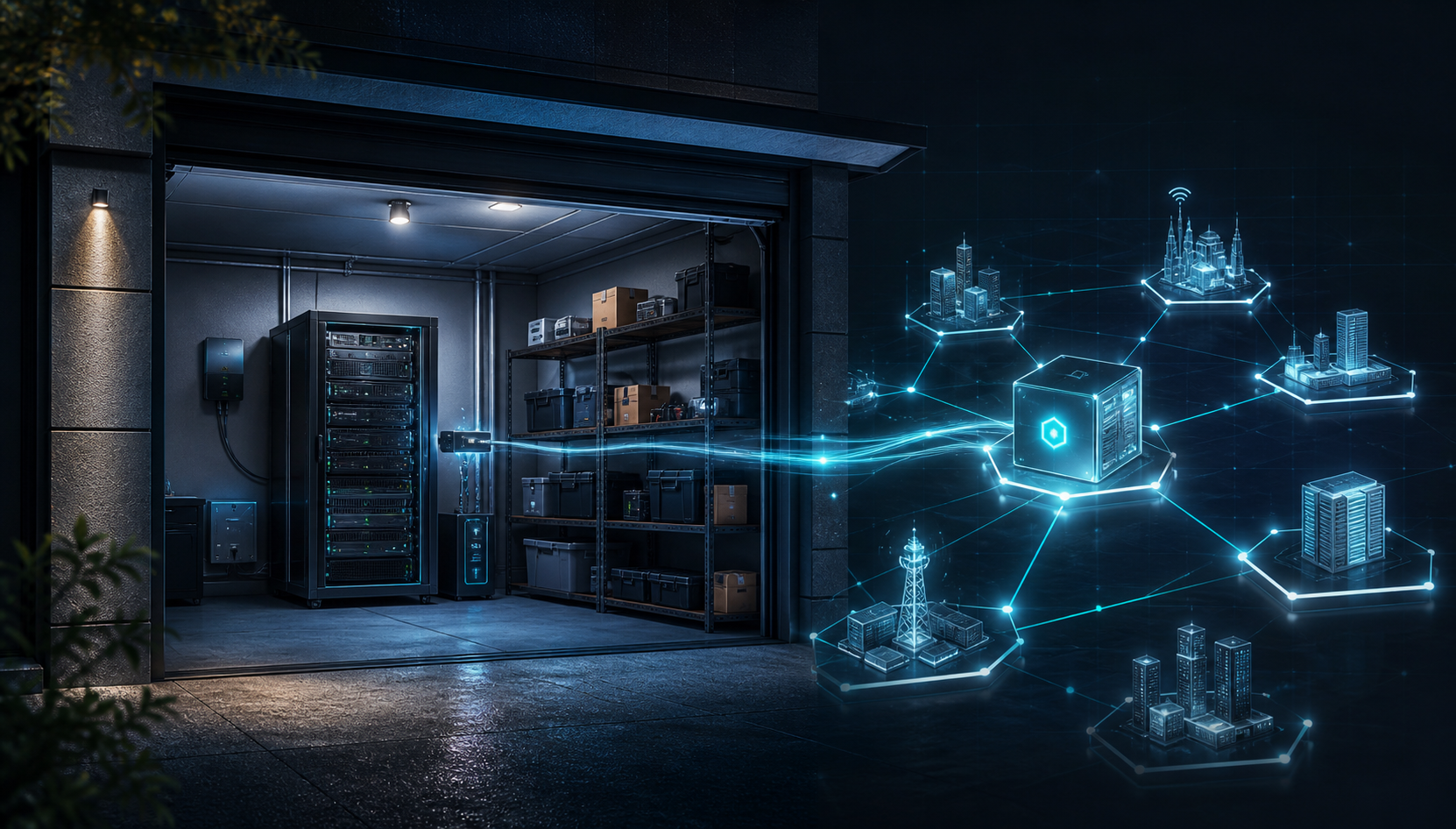
The car was sold, the family moved, or the usual routine simply changed — and now the garage, parking spot, storage room, or small space is no longer being used. The space exists, but it barely serves any purpose.
This becomes especially noticeable amid rising everyday expenses. A natural thought arises: if you already own the free meters, why not turn them into an additional source of income? Preferably without going back to being an employee, starting a second job, or taking on new commitments that consume all your free time.
Usually, the search for an answer begins with renting out. But this is not the only way to make the space work for you.
The First Thought — Find a Tenant
In a large Latin American city, you can easily offer a free parking spot to a neighbor or someone working nearby. A garage or storage space might be useful to someone who has nowhere to keep furniture, tools, boxes, or seasonal items. An extra room can also be offered for someone to use.
This is the familiar and straightforward path. The owner places an ad, shares about the free space in a local group, or turns to a specialized platform. Then they find a person who needs those square meters.
Thus, the space no longer stands empty. It serves a familiar function: someone else's car is parked there, someone else's belongings are stored, or another person temporarily occupies it.
However, all these options share one thing in common. For the space to generate income, it needs to be assigned for use to someone else.
And with this comes the relationship between the owner and the tenant. You need to find the person, agree on terms, provide access, respond to messages, and handle arising everyday issues. Even if it’s just one parking spot, the owner in a sense becomes a landlord.
For some, this is completely normal. But a person looking for a more independent source of income may not want to build it on constant interaction with tenants.
This is exactly where it makes sense to shift the question slightly.
Not “Who to Rent To,” but “What Can Work Here”
When we see an empty garage, we almost automatically think about who could use it. This logic is so ingrained that other possibilities rarely come into view.
But what if we asked differently?
Not who to hand over the free space to, but what useful thing can be placed there and operate while remaining the owner’s property?
This shift changes the role of the space itself. It no longer has to be a commodity temporarily handed over to someone else. It can become a platform for an operational owned resource.
Imagine a small physical or computational infrastructure. It belongs to an ordinary person, is placed in their free space, and performs useful work for the digital network. Depending on its purpose, this could be data processing, digital information storage, communication services, or another task required by people and online services.
The key here is not the technical device itself. The key is the idea: the value is no longer created simply by square meters, but by the owner’s resource operating within those meters.
In this case, the garage isn’t needed for someone else’s car, the storage isn’t for someone else’s boxes, the room isn’t for a tenant. The space becomes the physical foundation for a small part of digital infrastructure.
Owned Resource Instead of Rented Space
The difference is clear on a simple everyday level.
With usual renting, income is tied to someone else getting the right to use your space. The focus of that model is on the free square meters and the tenant who needs them.
In the infrastructure model, the focus is on your own operating resource. The space is not handed to someone else for living, parking, or storage. It serves as a base for something performing a certain function within a larger network.
You can compare it to a small production site — only its output is used in a digital environment. One owner provides suitable space and hosts their resource there. Other people do the same in their homes and spaces. Together, these separate parts help create infrastructure that used to be associated only with big companies and specialized facilities.
For the owner of free space, this opens an unusual perspective. It turns out they don’t have to start by looking for someone willing to rent the garage or room. An operating valuable resource can exist within, and the space itself becomes the foundation for another type of income.
This is the new door: space can not only be rented out — it can be used as a platform for your own infrastructure.
The Digital Economy Begins in the Physical World
The word “digital” sometimes gives the impression that the entire modern economy exists somewhere behind a screen and has nothing to do with physical spaces. But every online service ultimately needs real resources.
Digital information has to be stored somewhere. Data needs processing. Communication is provided by physical devices. To make all this work, places in the real world are needed — from large specialized sites to small spaces owned by ordinary people.
And here the garage, storage room, or free room gain new significance. Their value may extend beyond just the space, address, and locking the door with a key. They can connect a person’s physical resource with the digital network’s operation.
The owner sees their property not just as real estate anymore. They see it as a foundation for something active — small, theirs, and integrated into a broader system.
For many, this is an unfamiliar idea. We are used to thinking of infrastructure as the domain of large organizations: they build facilities, deploy equipment, and manage systems. But the digital economy is gradually unlocking the opportunity for individuals who already have suitable physical resources to participate in building useful infrastructure.
Sometimes this resource isn’t a big building or a separate plot of land, but just a few free meters in the city.
A Broader Map of Opportunities
Renting doesn’t disappear or lose its meaning. It remains one clear way to use free space. The new idea doesn’t require immediately abandoning the familiar option or choosing between two models.
It simply expands the map.
Previously, the question sounded like: “Who might need my free space?” Now another question stands alongside it: “What useful infrastructure can operate here and belong to me?”
Behind this question lies a whole world of ways ordinary people provide their physical and computing resources to serve digital networks. Free space in this world stops being just a rental asset. It becomes a place where an owned productive resource can operate.
The next step is to explore what kinds of such infrastructure exist, what useful work they perform, and how a person’s physical space connects with the digital economy. This new map is opened by DePIN World.
To evaluate server hardware and its economics, you can use the DePIN server profitability calculator.
And if you want to start with equipment you already have, check out Use What You Already Have — a general section with available options.