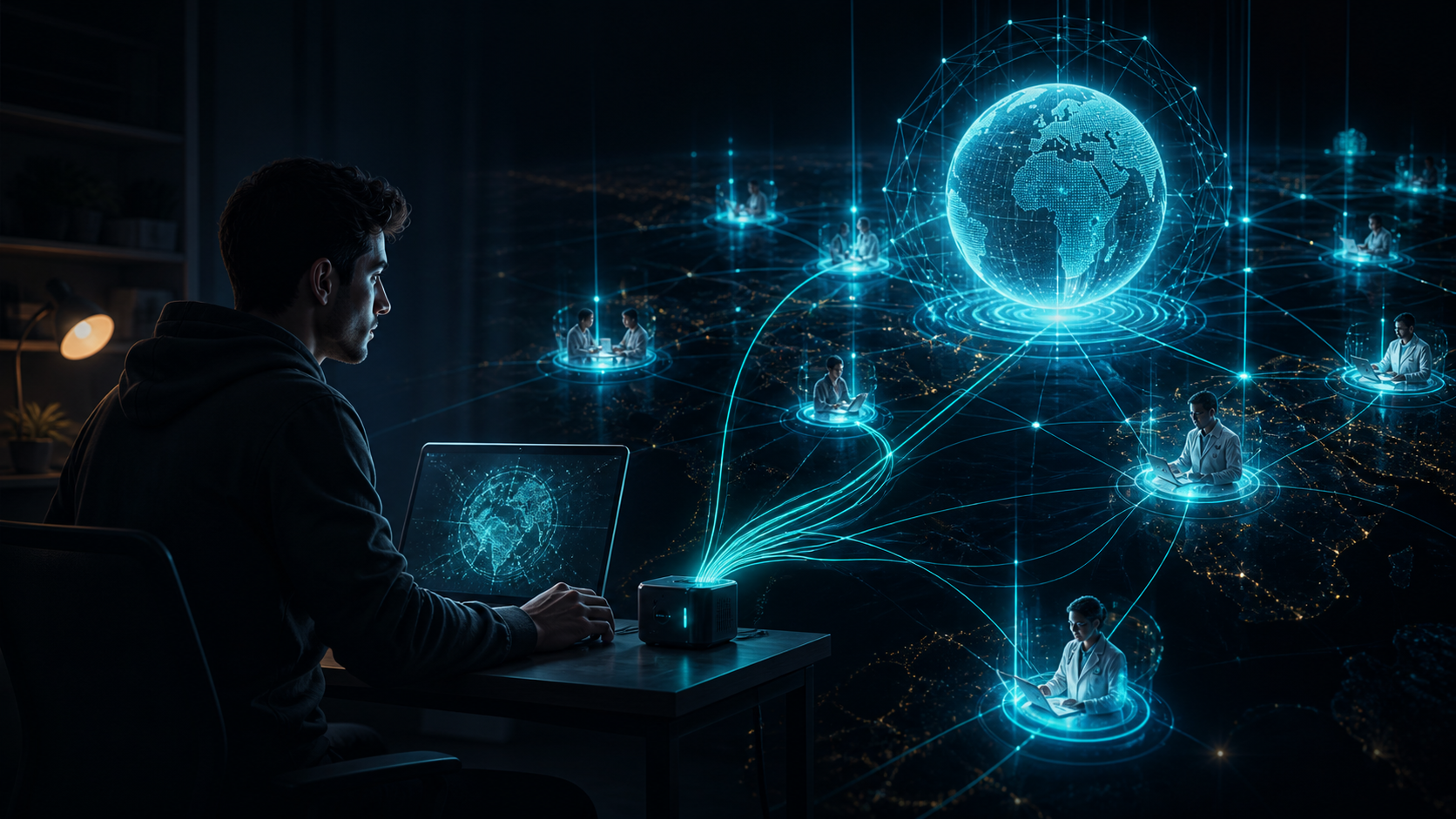
Not Just Working Online: Another Way to Participate in the Global Economy from Home
The diploma is obtained. The profession is set. There’s a computer on the desk, and internet at home. It seems that independent life should now begin.
But for many young doctors, engineers, senior students, and recent graduates in Arab countries, things turn out differently. Suitable jobs might be unavailable for months. And the salary offered is often not enough to confidently build their own life.
A person has done everything expected of them, yet the promised independence never arrives.
At the same time, they don’t necessarily dream of leaving. Perhaps they like their city. Their parents and friends live there, along with their language, habits, and plans. What they need isn’t a one-way ticket, but a chance to earn decently while staying home.
A Familiar Map of Opportunities
When local work doesn’t provide a firm foundation, the choices usually seem quite limited.
One can keep looking for a position in their specialty or wait for government employment. One can try to move to Gulf countries or the West. One can learn programming, translation, design, customer support, or another profession that allows working remotely.
For many, remote work truly becomes an important way out. A foreign employer or client can pay in a more stable currency, while the person gets to work from their own country.
But beneath all the differences between these options lies a common principle: income still primarily depends on personal labor.
The employer buys a working day. The client pays for the completed task. The customer pays for a consultation, text, drawing, translation, or several hours of support.
Even if the work happens at home and the money comes from abroad, the person still sells their knowledge, attention, and time.
There’s nothing wrong with this. This is how the majority of the economy works. Professions and skills remain valuable resources, and remote work can provide freedom that the local market lacks.
But this isn’t the only way to participate in the digital economy.
Is It Necessary to Sell Only Your Time?
Let’s consider a common question: what can a young specialist offer the global market?
The first answer is obvious — their own knowledge and labor. If they can design, heal, write, translate, or program, these skills can be sold beyond their country.
But there’s another answer that’s much less talked about.
The digital world not only needs people performing tasks. It constantly requires working resources: computing power, internet connections, data storage and transmission means, and other elements that support digital services. On the Use What You Already Have page, you can see which existing home resources can gain a second digital role.
Usually, a person only sees the finished result. They open an app, send a file, watch a video, or use an online service. It seems like all this just exists somewhere on the internet.
But behind any digital action lies a physical foundation. Devices operate somewhere. Data is stored somewhere. Connections are maintained somewhere. Someone owns these resources and provides them to others.
And here comes a new question: can an ordinary person be not only a user of this system or a remote employee but also an owner of a small part of its working foundation?
A Digital Resource That Does Useful Work
Such an option exists.
A person can own a useful digital resource and provide it to the global network. It could be computing power, a network resource, or another technical capability needed by digital services.
Instead of the usual scheme "I perform a task — I get paid for work," there emerges another:
"I own a resource — it does useful work for the network — I receive a reward for this."
This is an important shift in role.
A person is no longer necessarily only a job seeker submitting resumes. Not just an employee whose income depends on one employer. Not just a freelancer who must constantly find new orders. And not only a client of services created by someone else.
They can become an owner of part of the digital infrastructure — albeit small, but working and useful to other network participants.
This doesn’t mean giving up a profession or replacing the main work with it. The point is different: another possibility appears on the map. Alongside labor, ownership of a digital resource can be a source of participation in the global economy.
From Performer to Owner
For a young specialist, this is especially interesting not because it promises easy money. Their real desire is deeper.
They want more control over their own life. Not to depend entirely on the local labor market. Not to see emigration as the only way to increase income. Not to build their whole future around one employer. And not to fill every spare hour with additional orders.
Remote work moves the workplace online, but often preserves the same role: the person looks for someone to hire them or assign a task.
Owning a digital resource opens another role. Now they can not only work within the global system but also provide what it needs to operate.
The difference is similar to that between a person who works daily on someone else’s equipment and a person who owns a useful tool. In the first case, the main resource remains their working day. In the second, they gain something separate from their profession — their own active asset.
This doesn’t negate education, experience, or career. On the contrary, the new opportunity expands options. The doctor remains a doctor, the engineer an engineer, the student continues to study. But their participation in the digital economy no longer has to be limited to seeking overseas vacancies or selling free hours.
Another Door, Not a New Mandatory Path
Until now, the choice might have looked like this: find local work, leave, or learn a remote profession.
Now, one more option is added: own a resource that the digital network needs and that does useful work for it.
This discovery itself changes the perception of the internet. It turns out to be not only a place to search for jobs, communicate with clients, and use other people’s services. It’s also a space where ordinary people can own a part of common infrastructure and provide it to others. For example, the spare internet bandwidth calculator lets you evaluate one such resource with your own numbers.
To participate in the global digital economy from home, it’s not necessary only to look for a foreign employer or sell every free hour. You can own a resource that works for the network.
This is where a new world of questions begins — not about which remote profession to choose, but about which digital resources can belong to ordinary people, what useful work they perform, and how a user becomes an infrastructure provider.
DEPIN WORLD is the next step to explore this world: a place where you can see what forms this model takes and how an opportunity that was recently absent from the familiar future map works. Other materials and practical examples are collected in the our publications section.
Explore more on DePIN World →