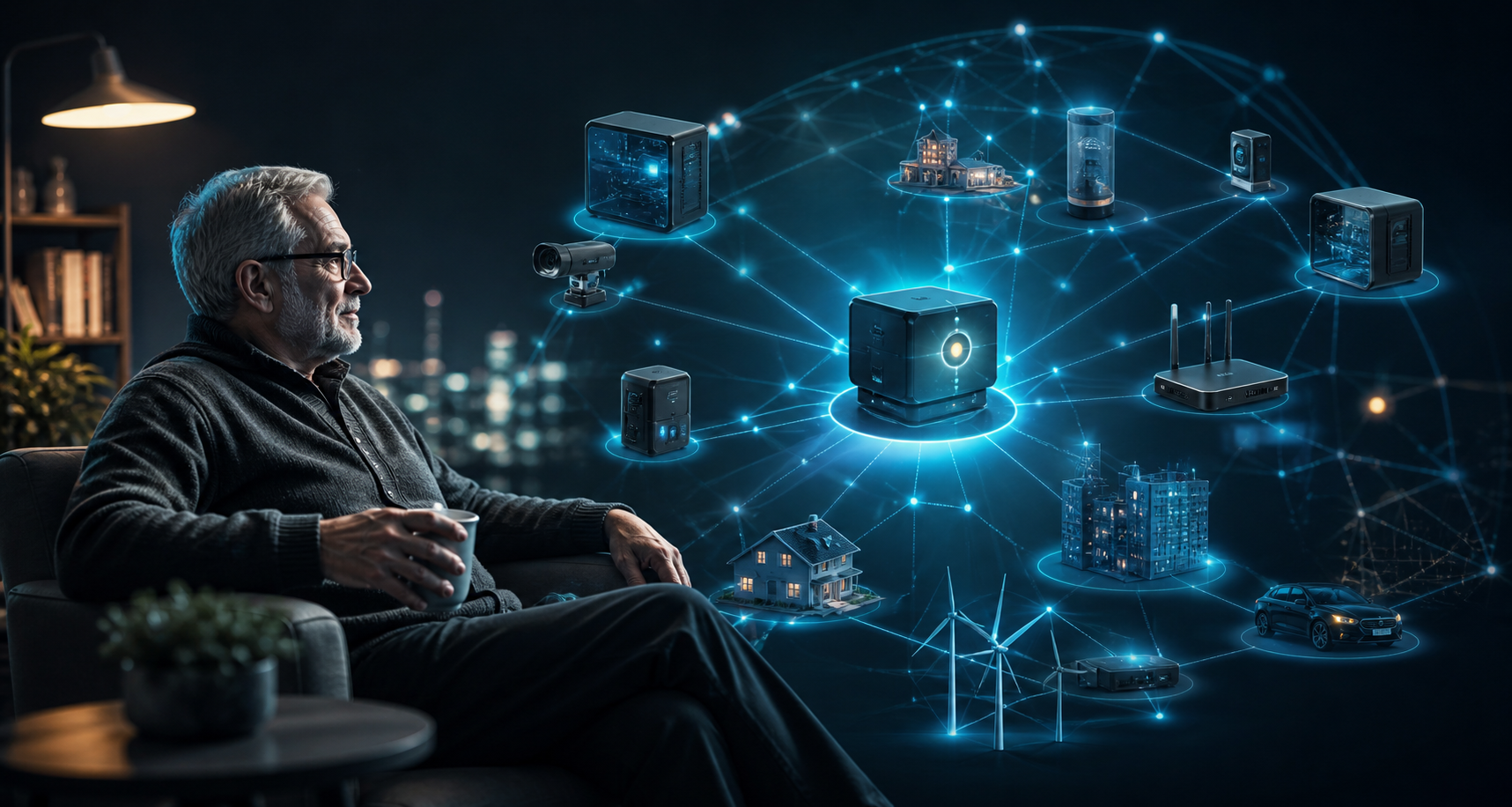
After retirement, many people notice an unpleasant pattern for the first time: more free time, but financial freedom is not guaranteed. Naturally, the idea of finding additional income arises. But most familiar options again require trading hours of life for money: shifts, orders, trips, constant calls, and deadlines.
There is another way. Instead of looking for another job, consider what useful resource you can own and manage. Then your income is linked not only to your personal time but also to the value this resource brings to other people.
Why Traditional Side Jobs Still Sell Your Time
The classic side job has a simple formula: as long as you’re busy, you get paid. Stop — income stops. This model is straightforward, but after decades of work, it often leads a person right back to where they wanted to get away from: rigid schedules, fatigue, and dependence on others’ decisions.
The problem is not the work itself. The problem is that the result is almost impossible to separate from your constant presence. Even a good skill is limited by the number of hours in a day.
Another Question: What Resource Can I Own?
A resource doesn’t have to be an apartment, a large business, or an expensive machine. It could be a small device, computing power, storage space, stable internet connection, or equipment performing a specific function within a network.
The main difference here is the person’s role. They don’t sell every minute of their involvement but choose a resource, launch it, monitor its operation, and make decisions. The technology handles repetitive tasks, while the owner retains control.
This is not a promise of "easy money" or a magical button. Any infrastructure requires calculation: how much does startup cost, what expenses will occur, who needs the results, and where rewards come from. But the logic itself is different — income is generated by the utility of the resource, not the number of shifts worked.
How Small Infrastructure Creates Value
The digital world constantly needs real power: connectivity, data storage and processing, computing, sensors, and other infrastructure elements. Previously, most of this was owned by large companies. Now, some of these tasks can be handled by independent equipment owners joined in a network.
If the resource is genuinely needed by the network and operates according to its rules, it creates measurable value. For that value, the owner can receive rewards. This principle is the foundation of DePIN projects — decentralized physical infrastructure.
What Remains on the Owner’s Side
The owner chooses a project, assesses risks, evaluates the economics, connects the equipment, and monitors the results. This requires attention but doesn’t necessarily become another full workweek. A well-chosen resource should free up time, not consume it entirely.
That’s why it’s wiser to start not with a purchase but with evaluation. You need to understand if there is demand, whether the conditions in your area fit, how much electricity and connectivity cost, how payouts work, and if it’s possible to exit the project without loss.
A New Role After Retirement
Retirement doesn’t erase experience. On the contrary, the ability to calculate, compare promises with facts, and avoid hasty decisions is especially valuable here. A person stops being a slave to someone else’s schedule and becomes the owner of a small working asset.
The scale can be modest. What matters is not the amount of equipment but the clarity of the model: what exactly works, who benefits, what expenses arise, and what remains for the owner. If those answers are vague, it’s too early to invest money.
Where to Start Without Extra Purchases
The first step is to inventory what you already have: a computer, smartphone, internet, free space, technical skills, or the ability to host a compact device. The section “Use What You Already Have” helps you start from this point and avoid premature equipment purchases.
Next, choose one straightforward model and carefully verify its numbers. Don’t trust promises of fixed returns, consider maintenance, and start with an amount whose loss wouldn’t disrupt your daily life.
At DePIN World, we analyze such opportunities free from advertising noise: explaining what problem the project solves, what is required of the owner, and where the idea ends and real economics begin. The goal is not to find another side job, but to learn to own a useful resource — deliberately, calmly, and with control over your own time.