# A Car Sitting Idle. Can Your Property Work For You?
Once, a car was needed almost every day — the commute to the office, running errands, meetings, shopping, weekends out of town. But life has changed: work has become remote, the family got a second car, daily trips became fewer, or the usual pace simply faded away.
Yet the car hasn't gone anywhere. It still takes up space and incurs costs, even though it mostly sits idle.
You don’t want to sell it. The car is convenient, familiar, and still occasionally needed. But increasingly, another question arises: can you get some return from property you already own—without driving yourself or turning the car into a new daily responsibility?
## Familiar options run out quickly
Typically, owners of cars that sit idle face a fairly short list of choices.
You can do nothing and keep the car "just in case." You can sell it and get rid of ongoing expenses. You can start earning extra money by driving. Or you can rent the car out short-term to others.
These options differ significantly but share one thing in common. To make the car bring in money, the owner usually has to either work themselves or hand the car over to someone else and regularly manage the process.
In other words, the usual logic is: income only appears together with extra hours of work or through conventional property rental.
But a person whose car mostly sits still often doesn’t want that. They do not want another shift after their main job. They don’t necessarily want to become a driver, dispatcher, or manager of a small rental business.
The real question they have sounds a bit different:
**Can a resource I already own create value without my constant involvement?**
This question opens up a much broader perspective.
## Not another job, but the resource’s own work
We are used to linking earnings primarily to personal time. To get extra income, you need to take on more tasks, start side work, find clients, or learn a new profession.
However, value can be created not only by personal labor.
It can also be created by resources a person already owns. A car is the clearest example because it can literally perform useful work. But the same principle applies beyond transportation.
A useful resource can be a physical device, space, available power, equipment, communication channel, or computing capacity. If other people or a digital system need this resource, its work gains value.
The main change here is not in technology but in the owner’s perspective.
Instead of the question “where else can I work?” a new question arises: “what do I already own that can perform a useful function?”
This is not a play on words. In the first case, a person sells additional hours of their life. In the second — they provide the work of a resource they already have.
## From a single item to a shared network
A resource on its own doesn’t always bring benefit. A car, device, or spare computing power can simply remain unused. To get them working, they need to be connected with those who need the function they perform.
Previously, such connections were usually provided by large organizations. They bought lots of equipment, built their own infrastructure, and then sold access to it.
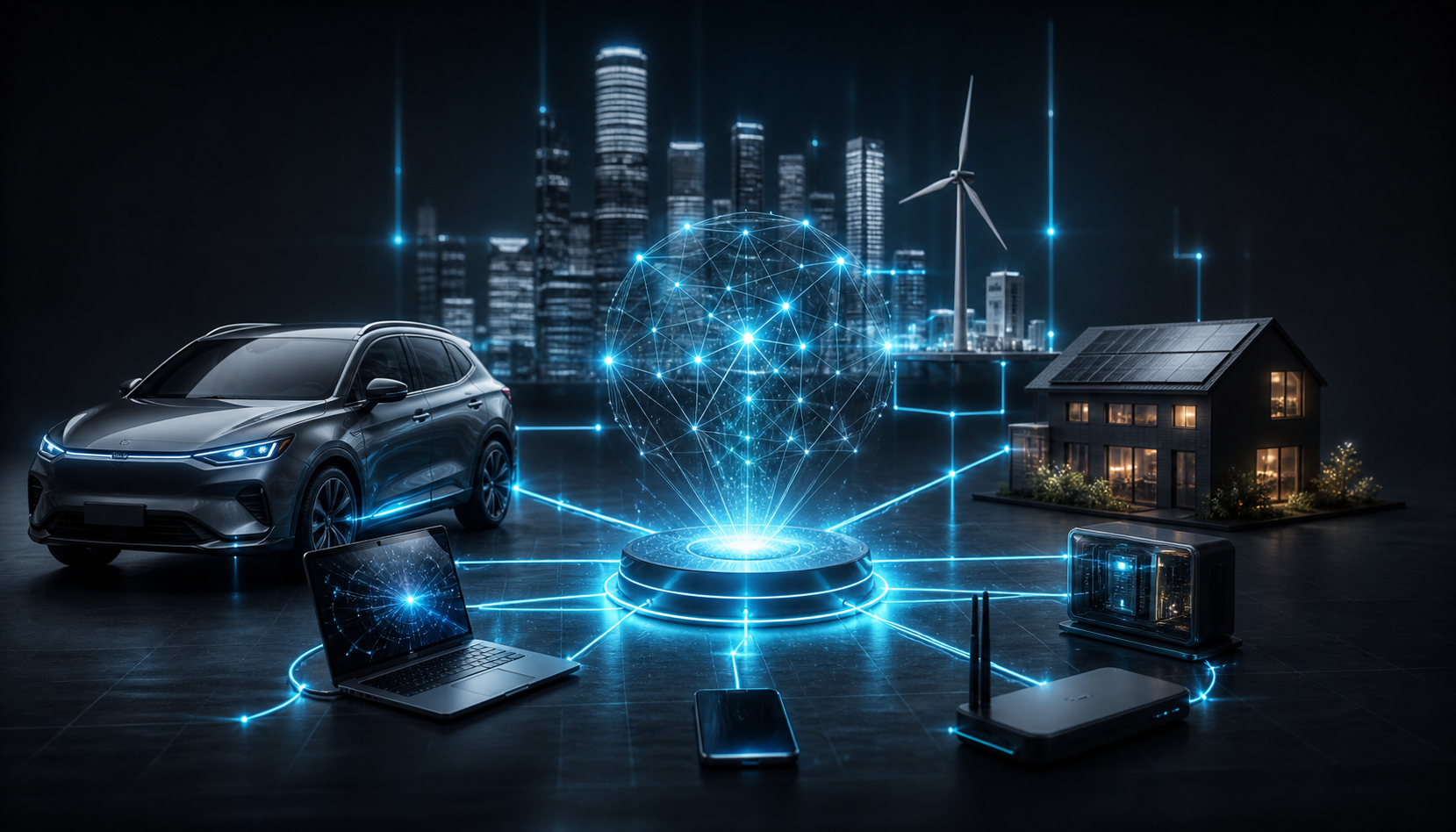
Digital networks allow building this system differently. Instead of one big owner, many ordinary people with small resources can participate. Individually these resources are limited, but together they can create a functioning infrastructure.
One participant provides what they have. Another adds their resource. The network links their work into a whole and directs it where needed.
For valuable contribution, the owner can receive rewards.
To understand the principle itself, you don’t need to delve into the technical details of such systems. It’s enough to see the core: **a person can be not only a user of someone else’s platform, but also an owner of part of the infrastructure used by others.**
## A new role for the ordinary owner
Most digital services have habituated us to a simple role: we open an app, order a service, and pay the company that owns the entire system.
The distributed model adds one more role. A person can not only use infrastructure but also participate in its creation with their resource.
This doesn’t necessarily mean a new profession. The point is different: value arises thanks to the work of property or technical capability, not because the owner constantly completes tasks personally.
Thus, the familiar story of a car sitting idle leads to an unexpected discovery.
Maybe the choice isn’t limited to letting the car be a cost, selling it, driving it yourself, or renting it out. Outside this familiar map lies a broader model: a resource owned by a person can become a useful part of a digital network and generate additional income through its work.
The car is important here not only as a specific item. It helps to notice the principle itself.
A person already has property. They want to keep it but don’t want it to be idle. And they seek a way to separate possible income from their own work hours. This is the natural starting point to get acquainted with the economy of working resources.
## Infrastructure can belong to many
The word “infrastructure” usually evokes images of something big: factories, towers, server rooms, vehicle fleets. It seems only states or large companies can own it.
But the digital economy is gradually changing this picture.
Infrastructure can be formed from many resources owned by different people. Each provides a small part of the overall system, and the network connects these parts into a useful service.
In this model, the ordinary owner stops being just a consumer. They become a participant: not building a huge system alone but adding the resource available to them.
This expands the idea of ownership itself. An item or technical capacity doesn’t just sit unused until next personal use. It can perform a function within a larger network.
This is where a new door opens: income can be related not only to how many hours a person works but also to the useful work done by resources they own.
## The car is just the beginning of the map
Thinking about a rarely used car can take you far beyond the question of what to do with a particular vehicle.
It helps reveal a whole class of opportunities previously unnoticed. Around us are physical and computational resources. Some of them are only partially used. By connecting to digital networks, they can become elements of shared infrastructure and bring their owners rewards for useful work.
This changes the original question.
Not just: “How can I make money with my car?”
But more broadly: “What resources do I already own, and which of them can work as part of a network?”
DEPIN WORLD continues exploring this map. Here you can see what types of resources become part of distributed infrastructure, why networks need them, and what the new role of a person — the owner of a working resource — looks like.
The story of a car that mostly sits idle turns out not to be a dead end but an entry into a wider world. A world where property can be not just a personal item or constant expense but your part of useful infrastructure.
Explore more on DePIN World →