# The Car Is Parked, but Money Keeps Going Out. Can Property Work on Its Own?
Several days a week, the car is needed by the family. The rest of the time, it just sits by the house or in the garage. Yet expenses don’t pause: every month there are payments for the loan, insurance, and maintenance.
They don’t want to sell the car—it would be inconvenient without it. Working as a driver after the main job isn’t in the plans either. Extra money is needed, but turning evenings and weekends into a second shift feels unappealing.
Then comes a simple question: can something already purchased not only require money but also support the family budget on its own?
## Few Familiar Options
When someone starts thinking about how to make money with a car, a familiar set of solutions usually appears.
You can sell the car and get rid of the costs. You can drive passengers yourself, deliver orders, or do other work behind the wheel. You can lease the car to others and charge for its use.
All of these options are understandable. But each requires a compromise.
Selling means losing something the family needs. Working as a driver means more hours of labor. Renting out means handing over the car to strangers and ongoing involvement in the process.
It creates a strange situation. A person already has a valuable resource, but to earn income, they are still offered to either give it up, work more, or set up a small side business around it.
However, behind the question about an idle car lies a more important thought.
Maybe the person isn’t looking for a way to “gig with the car.” They’re looking for a way in which the resource they own works, not just themselves.
## Not Another Job, But a Working Resource
The difference might seem small, but it changes the entire picture.
If someone drives passengers in the evening, their time remains the source of income. The car just helps get the job done.
But if the value is created by the resource the person owns itself, the owner’s role changes. They don’t have to become a hired worker. They keep their property and provide its useful capabilities where needed.
We’ve long known this principle on a large scale. A power plant generates energy. A tower provides communication. A server stores and processes data. A warehouse offers space. These things are valuable not just because they exist, but because they perform a useful function.
Usually, this kind of infrastructure belongs to large companies or the state. The average person only interacts with it as a client: connects to the network, uses an app, stores photos in the cloud, accesses necessary services.
But the digital economy gradually opens another possibility. Parts of the infrastructure can be owned by the network participants themselves—ordinary people and small companies.
## Infrastructure Can Consist of Many Parts
To build a useful network, it’s not always necessary to create one huge center and concentrate all equipment in one owner’s hands.
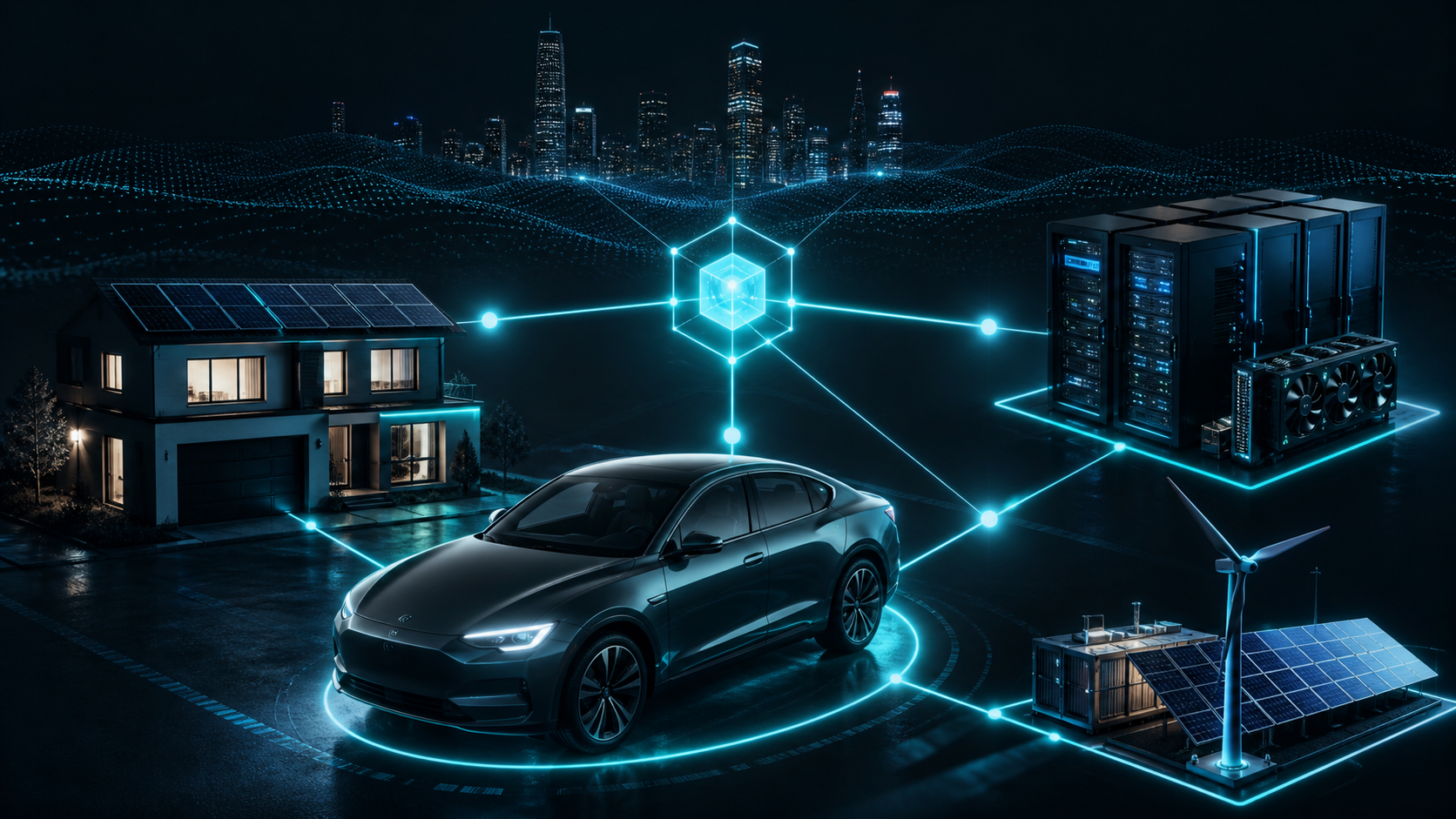
Sometimes the same task can be distributed among many separate resources. One participant provides a physical device. Another supplies computing power. A third offers data storage space. Together these parts perform a common function, coordinated by a digital network.
In this model, the owner provides not their labor but the useful function of a resource they own. If the resource truly participates in the network’s work and generates value for it, the owner can earn rewards.
This is where a new door opens.
Additional income can be built not only by selling things, renting them out, or working yourself. You can own a useful part of digital infrastructure and receive rewards for its operation.
At the same time, the person remains an owner, not becoming a driver, courier, or operator who personally performs every task.
This model is often connected with DePIN—decentralized physical infrastructure networks. Behind this unusual term is a pretty simple idea: a useful network is created not only by one large organization but also by many individual resource owners.
## The Car Helps Reveal a Broader Opportunity
The car in this story is important not only as an item one would like to make "pay for itself."
It helps to notice the principle itself.
At first, a person sees the car as a constant expense. Then they ask what useful work it could do. After that, the next step becomes possible: to look at other resources people own in the same way.
What changes if property is seen not just as a personal item but as a potential part of a working system?
Then a third category appears between two familiar ones—"my item" and "large company property." This is a resource that still belongs to an ordinary person but at the same time performs a useful function within a shared network.
That way, expense-property can turn into infrastructure-property.
This is not about any idle item automatically generating money. The key insight lies elsewhere: the category of possibilities is broader than it seems. Income may not only be tied to the owner’s active work or classic rental.
Value can be created by a resource incorporated into a digital network.
## A New Role for the Ordinary Owner
In the usual economy, people most often choose one of two roles. They either work and get paid for their time, or buy a ready service from a company that owns all the necessary infrastructure.
The new model adds a third role: a person can own a small useful part of this infrastructure and take part in the value it creates.
This doesn’t require becoming a tech corporation. The point is that a large network can be built from many separate contributions. Each by itself may be small, but together they form a working system.
For a car owner, this idea starts from a mundane frustration: the car sits unused, but expenses continue. But it leads to a much more interesting question:
What other resources people own can perform useful work for digital networks?
This inevitably brings up further questions: how these networks connect participants, what owners earn rewards for, and what forms this economy already takes?
Until recently, the familiar map included selling, side gigs, and renting out. Now an additional path appears—owning a resource that becomes part of digital infrastructure.
DEPIN WORLD is the next step in exploring that world: a place to see which resources already work this way and how ordinary owners become participants in the infrastructure they create.
Explore more on DePIN World →