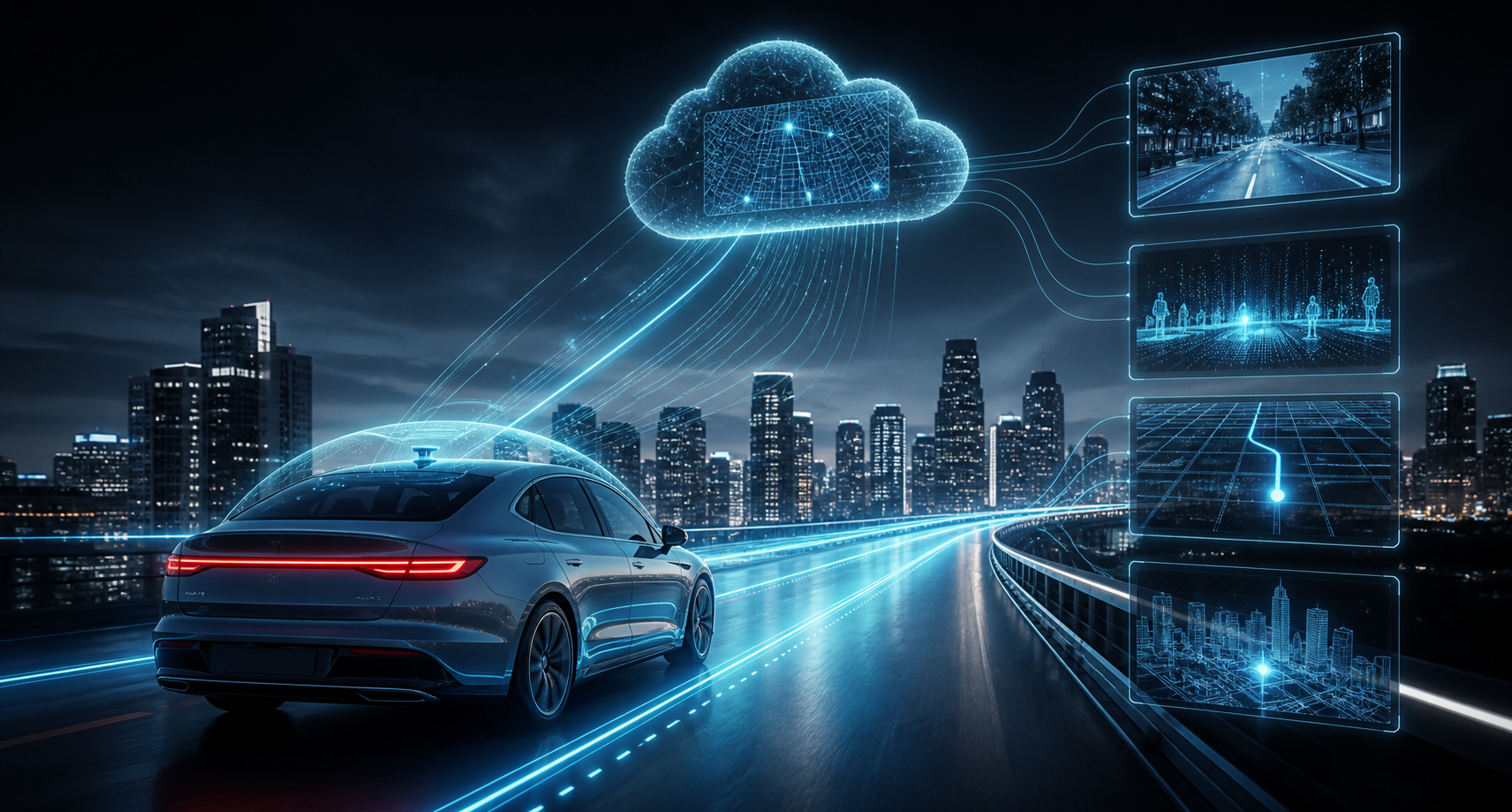
You need a car every day. To get to work, take your child somewhere, stop by the store, run errands across town. It’s hard to give up these trips, but each one costs money: fuel, maintenance, consumables, and inevitable wear and tear.
It’s natural to wonder: if the car is used so much, could it at least partially offset those expenses? The usual answer involves extra work. You could pick up rides as a taxi driver, do deliveries, or spend a few more hours behind the wheel. But not everyone wants to turn an already busy day into a second shift.
Sometimes, the car doesn’t need another job to earn money. Sometimes, it’s enough to look at the trips that are already happening from a new perspective.
The car drives a lot but mostly just costs money
A personal car is one of a person’s most frequently used resources. It regularly moves through the city, covers the same streets, reaches different districts, and helps the owner handle daily tasks.
From an economic standpoint, its role usually remains one-sided. The car transports the person but also consumes money. The more necessary mileage, the more noticeable the expenses.
People usually try to change this in two ways.
The first is to save: choose cheaper maintenance, cut unnecessary trips, monitor fuel consumption. This helps reduce the burden but doesn’t change the car’s fundamental role.
The second is to make the car generate income. But almost immediately, this involves taxi, delivery, and other platforms with orders. The car truly starts to earn, but the owner must also put in extra work. They need to set aside time, accept a task, plan a route, and drive a distance they wouldn’t have needed without the order.
It’s a simple exchange: more hours and mileage open up more earning opportunities. For someone who already drives a lot, that isn’t always a suitable solution.
There’s also an easier option — small rewards for tracking routes within a specific mapping system. But even that is often seen as a local bonus from a particular platform rather than a fundamentally new role for the car.
This is where the usual scope of possibilities falls short.
A regular trip already creates something useful
Imagine a typical morning. You get in your car and drive to work along a familiar route. No extra orders, passengers, or specially selected streets. It’s a trip that would happen anyway.
While the car moves, it exists in real physical space: crossing roads, intersections, and neighborhoods. Along with the movement comes a stream of observations about what’s around and how the urban environment is changing.
This information is valuable to the digital world. Maps, services, and other systems can’t exist only inside computers. To reflect reality, they need data from reality itself — fresh, regularly updated, collected from various locations.
Usually, the driver doesn’t see their trip as a source of such data. For them, it’s just a journey from one point to another. But if you separate the mileage itself from the idea of extra work, the picture changes.
The person is already moving through the city. The car is already where digital systems need observations. The route already creates an opportunity to collect useful information.
Therefore, value may lie not only in the passenger delivered or the order fulfilled. The very fact of the car moving through the real world can be beneficial.
The car’s second job — without a second driver shift
This opens up a new possibility.
The car can be seen not only as transportation but also as a mobile part of digital infrastructure. During a normal trip, it can help gather and transmit sought-after information about the surrounding environment.
The main change isn’t in the route but in the owner's role.
In taxi or delivery, the person becomes the task executor. The platform tells them where to go and what to do. Income comes from new work that didn’t exist before.
In the infrastructure model, it works differently in principle. The person already has a physical resource — a car. There’s regular mileage. There are routes they already drive. This resource can simultaneously perform another useful function for the digital network.
The trip remains your trip but gains a second purpose.
You’re still heading to work, the store, or personal errands. The car solves the usual task — transporting you. At the same time, it can contribute to the creation of digital data, for which the owner receives additional income.
You don’t need to turn every free hour into a new shift. No need to look for a passenger or invent reasons to drive more. It’s about a different logic: using existing movement in two directions.
This is the key insight. For the car to start doing useful economic work, the owner doesn’t have to become a professional driver. Sometimes, the value is created by the resource itself, placed in the right location and performing a network-beneficial function.
Not a route bonus, but a new role for ownership
At first glance, this might just seem like another reward for a trip. But the meaning is broader.
In this model, the car stops being just a personal item that always requires expenses. It gains an additional productive function. Its mobility, presence on the streets, and ability to interact with the surrounding space become useful not only to the owner but also to digital systems.
The person’s position changes too. They are no longer just a user of someone else’s app or a task executor for platforms. They own part of the physical foundation on which digital infrastructure can rely.
This is a different way to look at familiar ownership.
Infrastructure is usually seen as something big and remote — built by large companies, cities, or specialized organizations. But digital networks might need resources already distributed among millions of ordinary people. Cars, sensors, and other devices are in homes, on streets, and move daily along familiar routes.
If their useful work is combined, an infrastructure emerges, created not only by big centralized systems. The owners of physical resources participate — and earn income for their contribution.
A familiar trip starts to look different
After this, even a familiar route can be seen in a new light.
Before, it only meant yet another expense: a bit more fuel, mileage, and wear. The opportunity to earn appeared only when new work was added to the route.
Now, there’s an additional door between these two options. The trip you already make can be not only personal movement but also useful work for the digital world. The car remains your transportation, but at the same time, it becomes a part of the infrastructure you own.
This doesn’t change why you got behind the wheel this morning, but it changes your understanding of what your car can also do along the way.
And if this possibility exists for the car, a broader interest naturally arises. What other everyday resources could people’s belongings contribute to building digital infrastructure? How do car and sensor owners become not just service users but those who provide the physical foundation? What does a world look like where familiar property gains a second, productive function?
GUIDE to DePIN WORLD extends this map: from cars and sensors to other physical resources ordinary owners can connect to the functioning digital infrastructure.
Explore more on DePIN World →