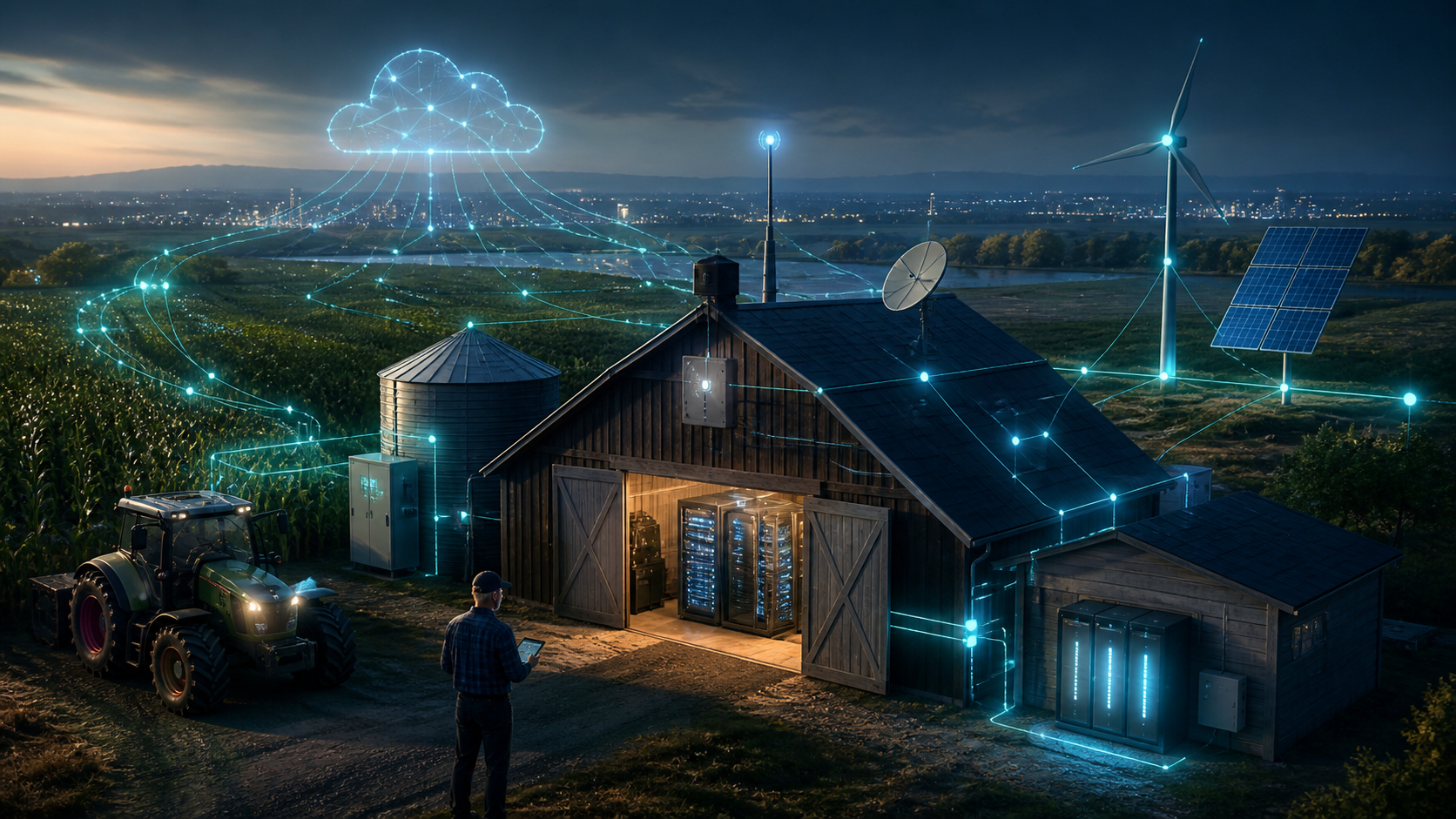
When a Farm Needs Not a Second Business, But New Work for Its Resources
The workday has long ended—or at least, it should have. But after fieldwork and farm chores, there are still orders, paperwork, and the main question: where to find additional income without turning life into an endless second shift?
The owner of a small farm usually knows how to work hard. The problem isn’t a lack of effort. It’s just that agricultural income isn’t always enough to support a family, develop the farm, and enter the next season with peace of mind.
Staying on the land doesn’t mean rejecting change
A person who has spent years building up the farm doesn’t want just any side job. They want to preserve the land, independence, and the right to decide how their day is structured.
You can find outside work, open a new business line, process products, host guests, or provide equipment services. All of these can bring money, but almost always require new hours of personal labor.
The problem of the second working day
Direct sales require engagement with buyers, packaging, and order fulfillment. Guests demand constant attention. Processing is a separate production process. Equipment services add scheduling and obligations.
This creates a paradox: to save the farm, a person creates yet another job for themselves. So it’s useful to ask a different question—not “What else does the farmer have to do?” but “What else can the existing farm resources do?”
A farm already consists of working assets
The farmer is used to seeing property not as scenery, but as a working resource. The land produces a crop, the equipment performs mechanical tasks, the warehouse stores products, and energy powers the machinery.
This logic can also be extended beyond agriculture. The digital economy also needs a physical foundation: electricity, connectivity, space for equipment, data storage, and computing power.
The digital economy stands on the land
Any digital network ultimately relies on physical resources that are placed somewhere and belong to someone. A farm can become one of those places if it has suitable space, energy, internet, or the ability to host equipment.
For example, the economics of affordable energy can be assessed through the Solar Systems section, and the availability of free internet bandwidth can be checked via the spare internet traffic calculator.
The farm as part of useful infrastructure
Let’s imagine a farm not just as a producer of grain, milk, vegetables, or meat. It may have buildings, electrical capacity, connectivity, and free space. If some of these resources perform useful work for a digital network, the farm then provides not just agricultural products or the owner’s personal time, but an infrastructure resource.
Scenarios can vary: communications equipment, data storage, computing, energy capacity, and other infrastructure tasks. The important thing is not the technology’s name, but the principle—an asset owned by the farmer gains an additional useful function.
Income does not necessarily start with a new shift
This creates another path for diversification. The farm’s income can depend not only on the harvest, visitors, or the owner’s personal labor hours, but also on the work of a resource already owned by the proprietor.
If the farm has suitable premises and electricity, the next level might be computing equipment. For an example of real server infrastructure, see the AMD EPYC SP3 Value Server Guide.
Not a new business just for the sake of it
The idea is not to force the farmer to become an IT specialist or start another company. The point is different: to look at the farm as a set of assets and understand which of them can perform additional useful work without the owner’s daily involvement.
Not every plot, warehouse, or internet channel is suitable for such a scenario. Calculations are needed here—equipment cost, energy, connectivity, usage, and actual network demand. But the approach changes the choice: instead of the mandatory “work even harder,” there’s an option to “give new work to an already existing resource.”
Another role for the farm
A farm has always been more than just a workplace. It's land, property, experience, and the right to make autonomous decisions. Now it can take on an additional role—to be the owner of part of the physical infrastructure of the digital economy.
DePIN World specifically explores such options: what can be used, how to test an idea before buying equipment, and where an interesting concept ends and a real economy begins.