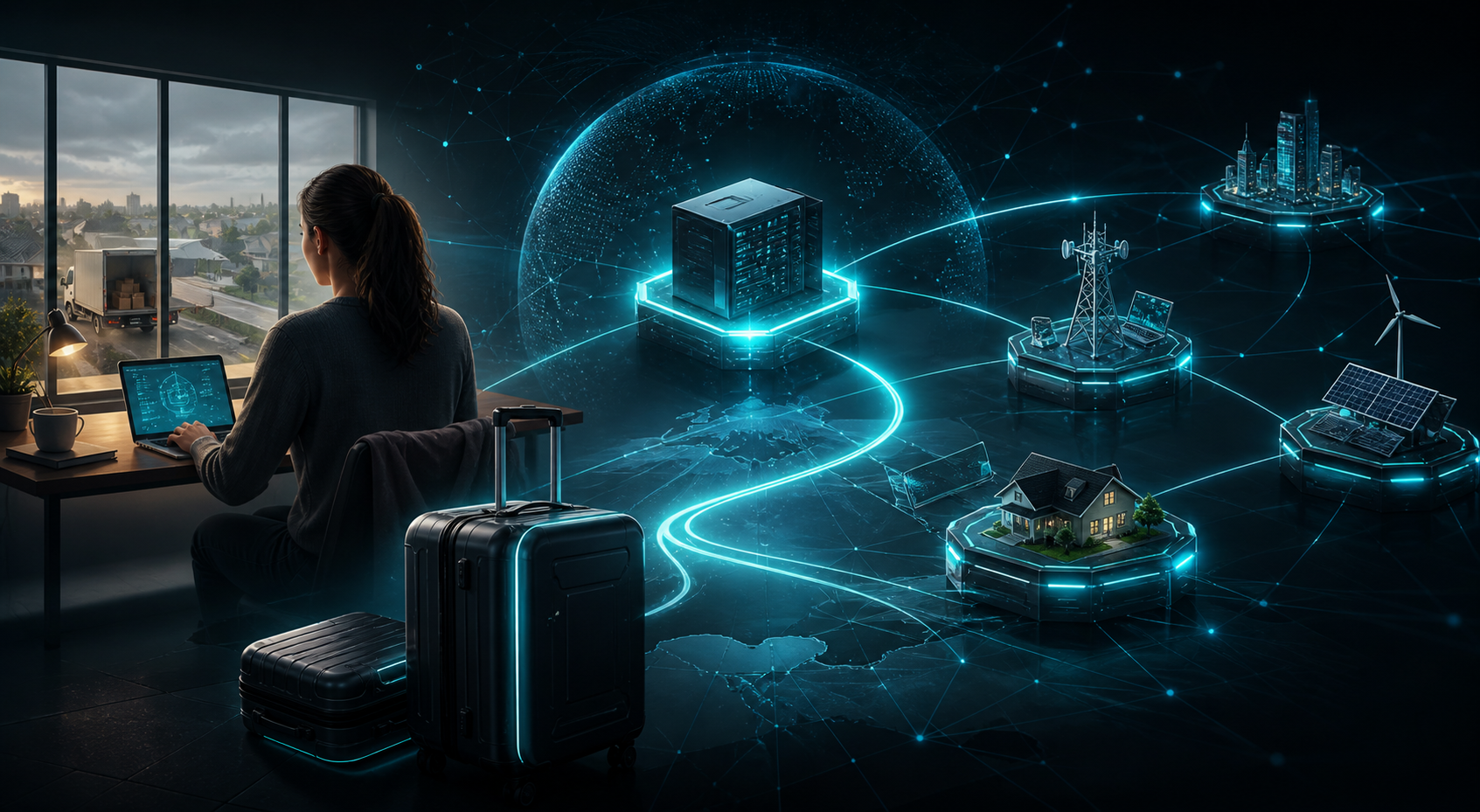
When the Family Moves Again: Can Your Income Source Move With You?
An order for a new duty station changes not only the family’s address. For the spouse of a service member, it often means that the job they’ve built is once again temporary.
Education, experience, and professional skills stay with the person. But the position, clients, business connections, and familiar job market may remain at the previous location. Where others can simply continue their careers, military families often have to adapt almost from scratch.
A Career That Has to Be Rebuilt
After every move, a familiar pattern repeats: you need to understand the local job market, update your resume, figure out qualification and licensing requirements, and rebuild professional networks.
Even remote work does not always fully solve the problem. Employers may only allow working from certain countries or regions. Clients may be lost. Contracts and tax conditions may change along with the address.
As a result, the person finds themselves again in the role of a job seeker—not because they are less professional, but because the environment around them has changed.
The main difficulty is not the lack of skills. It’s that the source of income is too often tied to a location the family does not choose themselves.
Remote Work Helps but Doesn’t Solve Everything
Military families already have clear options to make their careers more mobile: remote positions, freelancing, ongoing online clients, small online businesses.
All of these options do indeed provide more freedom. But they share one trait: at the center is still your own labor.
To earn income, you still need an employer, client, order, or a steady stream of sales. The profession becomes portable, but not always the source of income itself.
So the usual question is: “What job can I keep after the next move?”
But you can also ask the question differently.
Not Just Where You Work, But What You Own
Imagine a source of additional income based not only on a position or contracts, but on a useful resource you own.
In the traditional economy, this could be equipment, transportation, facilities, or tools. In the digital economy, it could be computing power, free disk space, an internet connection, or other infrastructure that does useful work within a larger network.
These models belong to the world of DePIN — decentralized physical infrastructure networks. Their core idea is simple: infrastructure can be owned not only by large companies. Individuals can also provide valuable resources and participate in the economic value they create.
What Changes for the Individual
The person remains a specialist, employee, or entrepreneur, but gains another possible role — owner of a resource that operates independently of a specific employer.
This doesn’t mean just buying a device will generate income on its own. You need the right network, demand for the resource, stable internet, electricity, and a viable project economy. But the principle is different: part of your income can depend not only on who hires you after the next move.
It’s Not Just Your Workplace That Can Be Portable
Usually portable income means a laptop and remote work. But portability can be understood more broadly.
Along with your family, not only your ability to work but also your own small digital infrastructure can move. The address changes at the new place, but the principle of participation in the economy doesn’t necessarily reset.
It’s especially interesting to start not with expensive new equipment, but with what you already have at home. An old gaming PC, free disk space, internet bandwidth, or other underused equipment can sometimes already be a valuable resource. That’s exactly why DePIN World has a section “Use What You Already Have”.
This approach is well suited for people whose lives are built around mobility. You don’t have to start a new business from scratch every time. Sometimes it’s wiser to have a small technical asset you can move, reconnect, and continue using.
Income Not Tied to One Employer
For military spouses, this difference is especially important. When relocating, a person doesn’t lose knowledge—they lose the familiar environment where that knowledge earned money.
Owning a useful resource offers a different starting principle. The source of additional income becomes not only a company’s permission to hire you or a client’s willingness to pay for your time, but also what you own and can independently manage.
This is not a replacement for a profession or a call to quit regular work. Rather, it’s an additional layer of economic independence alongside a career, remote work, and your own business.
First—Check the Economics
Any infrastructure idea should start not with buying equipment, but with calculations. The cost of hardware, electricity, network, and real demand matter more than attractive promises of profitability.
For larger setups, you can preliminarily estimate it using the DePIN World server economy calculator. For home resources, it’s better to start by assessing equipment you already have.
A New Door Into Digital Infrastructure
Frequent moves remain a challenging part of military family life. A new city or country requires time, adaptation, and new connections.
But the map of economic opportunities today is broader than choosing between local work and a remote vacancy. Another option is gradually being added: owning a small useful resource and connecting it to a distributed infrastructure.
The next move could again change where you live. But it doesn’t have to bring you back to square one every time. Sometimes you can move part of your own economic infrastructure along with your suitcases.