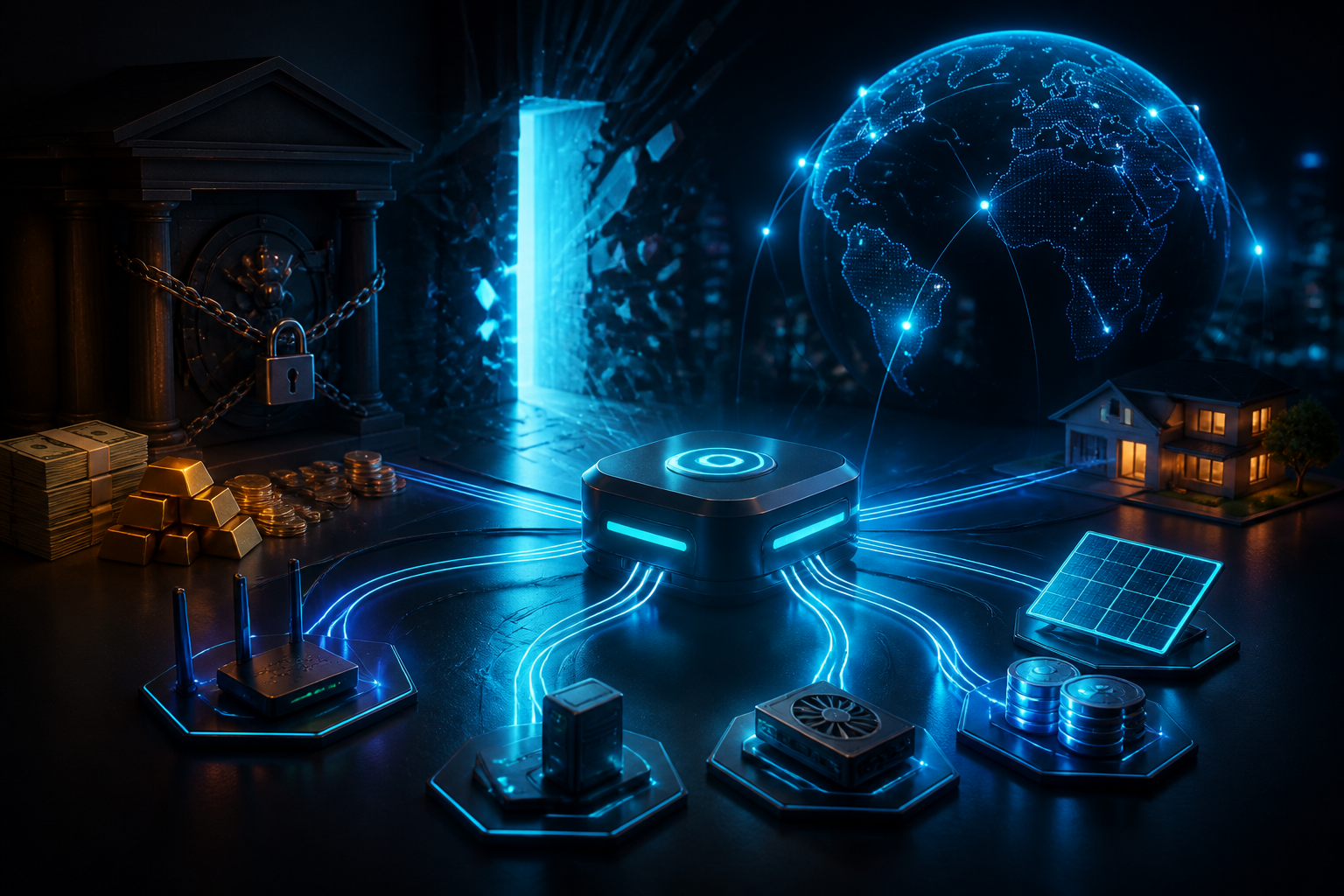
When Money Is Really Yours: From Savings to a Working Resource
A person can save money for years—bit by bit, without grand plans or quick expectations. Part of a salary, compensation, earnings from abroad. These savings aren’t for a nice number in a banking app, but for very concrete things: treating parents, children’s education, starting a business, or a peaceful retirement.
But at the crucial moment, it may turn out that the money is in your name, yet you cannot freely access it. The amount on the screen remains the same, but the ability to use it has disappeared.
And that changes the very understanding of economic independence.
When the account record stops being true ownership
As long as the financial system works as usual, the difference between "the money belongs to me" and "the bank states that the money belongs to me" is almost impossible to notice.
A person receives their salary, pays for purchases, transfers money to relatives, withdraws cash. It seems obvious: if the amount is reflected in the account, it means it’s available to the owner.
Control matters more than the figure on the screen
The gap is revealed only when money is truly needed, but you cannot use it. At that moment, it’s no longer about interest rates, app convenience, or service quality. It’s about the ability to decide for yourself when and on what to spend the fruits of your labor.
Can you pay for medical care right now? Buy goods for your business? Support a child who has entered university? Start a life somewhere else?
If the answer depends not on the money owner, the usual sense of ownership crumbles. After such an experience, the desire to regain control over earnings becomes not just a financial trend but a matter of freedom.
Where people usually look for more control
The first response usually involves finding another place for savings. Some keep more cash at home. Others buy gold or real estate. Some transfer part of the value into digital form or seek a new place to store it that they trust more.
At the heart of these decisions lies one clear idea: to shorten the distance between the person and their property.
Storage solves only part of the problem
Cash is close at hand. Gold is seen as a tangible reserve. Real estate physically exists and can serve the person. Digital form lets you organize storage and transfer of value differently.
All these options answer one important question: where to keep what’s already earned to control it better?
But there is another question: does property have to be only stored?
From passive reserves to a working resource
Savings are usually seen as a reserve. Money sits in an account or at home. Gold is kept in a safe place. Real estate preserves the value invested in it. The owner's primary task is to protect what has been created.
But you can own not just a reserve. You can own a resource that performs useful work.
The simplest example is a tool. When it lies idle, it’s just a thing owned by a person. When used in work, it helps create new results. It doesn’t cease to be ownership but becomes a productive resource.
The digital economy also relies on physical resources
Despite the word "digital," the modern economy doesn’t exist independently. It needs computing power, connectivity, data storage, and equipment that performs real work.
Usually, a person encounters this system only as a client. They use apps and online services, while the working foundation is somewhere far away, owned by large companies.
But that’s not the only possible role.
Not just a client, but an owner of part of the infrastructure
An ordinary person can own a small physical or computing resource needed by the digital economy. Such a resource doesn’t just store invested value. It can do useful work and bring the owner rewards for providing capacity or service.
This is exactly the idea behind DePIN Lite — "use what you already have": it makes sense first to check the resources you already have at home and see if they can participate in the digital infrastructure.
Storing capital and owning a working asset are not the same
In one case, a person moves savings from one place to another, trying to keep what’s already earned under tighter personal control.
In another case, they become the owner of a working resource. This resource remains their property, participates in real activity, and can generate new value.
Economic independence can mean not only safer storage of earnings but also owning a useful resource that works.
From small capacity to owning computing infrastructure
You don’t have to start with large equipment. For one person, the first step may be a computer, storage device, internet connection, or other device they already have.
If the idea is clear and you want to move from small experiments to a serious computing machine, check out the DePIN Servers section. It features five levels of server setups—from the first simple machine to a large computing installation.
Understand the model first, then do the math
A working infrastructure is not a promise of easy income. Any equipment has a price, expenses for electricity, connectivity, maintenance, and the limitations of a specific network.
Therefore, after understanding the model itself, the next step is to calculate the numbers. For this, we have the DePIN server technical calculator, where you can compare equipment parameters and the preliminary economics.
A broader understanding of ownership
After losing trust in intermediaries, people naturally think first about protecting what they’ve saved: where to keep value and how to ensure earnings again depend on their decisions.
The new model doesn’t cancel familiar storage methods. It simply expands the map of possibilities.
Economic control can mean not only independent storage. It may also include owning something that keeps working.
This is the shift from the question "how do I keep what I have?" to "what can I own so that the resource participates in creating new value?"
Thus, a person ceases to be just a contributor, buyer, or user. They gain another role—the owner of useful infrastructure.
A new door
Value can be not only taken out of others’ hands and kept under your control. It can be turned into a resource belonging to you that performs useful work.
This is one of the core ideas of DePIN: ordinary people can not only use digital infrastructure but also own its working parts.
You don’t need to understand all the technical details in advance for the first step. It’s enough to see the main difference—between a reserve that’s just stored and your own resource that works.