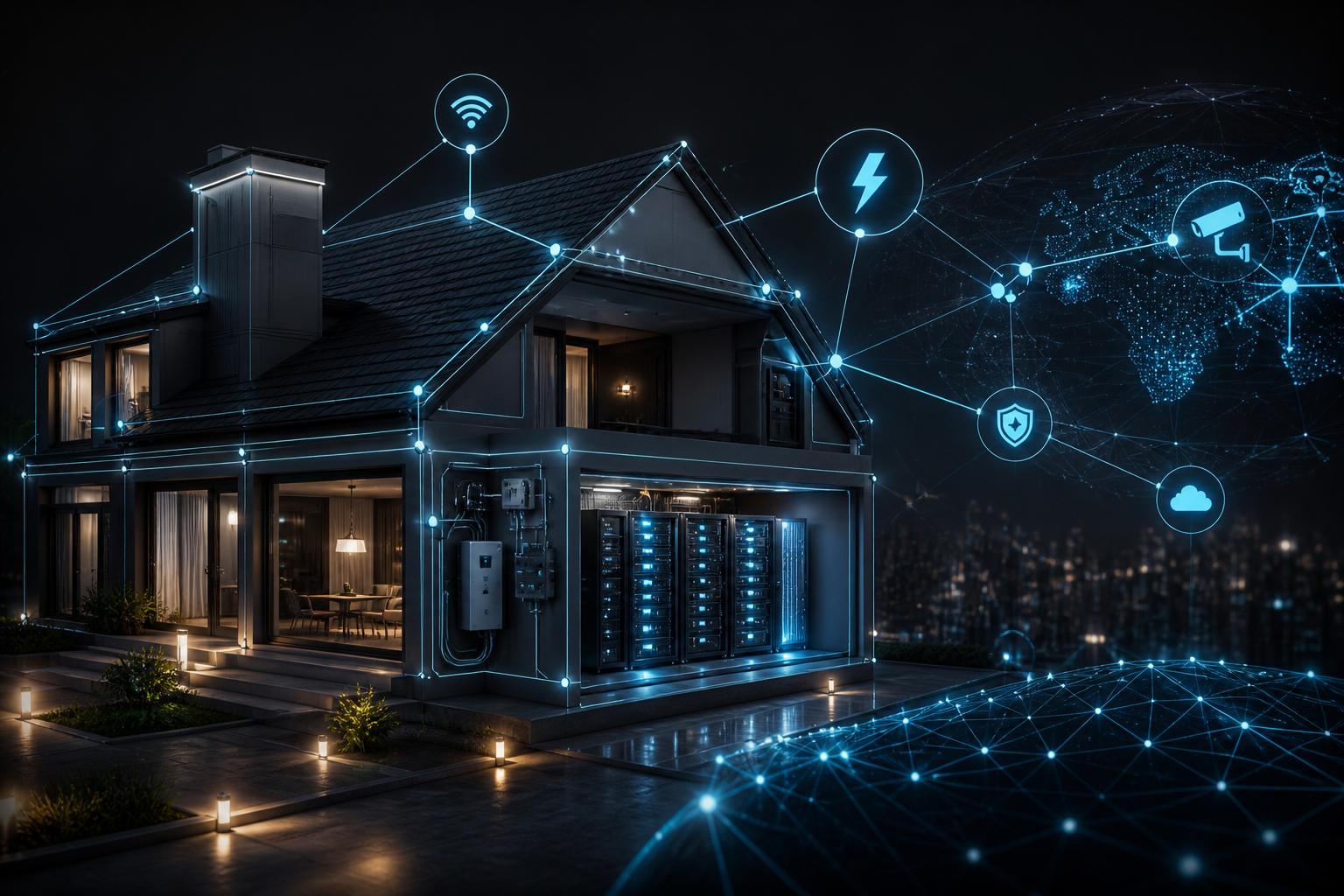
A large house in your hometown rarely remains just real estate—especially if it was built with money earned over years of living away from family.
Within its walls are long shifts, postponed purchases, remittances home, and the hope to return one day. But the return keeps being delayed: the owner continues working abroad, relatives look after the building, and bills and expenses keep coming.
You don’t want to sell such a house. Nor do you want to fully give it away to strangers. So another question arises: can the house provide benefits now while still remaining a family place to return to?
The usual choices: wait or rent out
Usually, the owner sees two options. The first is to change nothing and keep the house closed until returning. The second is to settle relatives there, rent out the entire house, a separate floor, or several rooms.
But for a family home, this is not always a simple choice. To receive rental income, part of the personal space must be handed over to others and then managed remotely. And if the house remains entirely your own, it usually just incurs expenses.
This crossroads seems strict when we look at the house solely as a set of living rooms.
A house is not just living space
The building has a roof, electricity, internet, protected space, and a place to install equipment. All these are physical resources already created that the family paid for during construction.
Connectivity, electricity, and free space
Usually, the internet is needed for communication and video, electricity for household appliances, and a free room just waits for the owner’s return. However, those same resources can perform useful work beyond everyday home life.
Digital networks require real infrastructure: connectivity, data storage and processing, computing power, and equipment distributed across cities and countries. More about this mechanism is explained in the article "What Servers Do in the DePIN Network".
Part of such infrastructure can be owned not by a large corporation but by an ordinary person. This is where the third possibility appears.
You don’t have to give away the house for it to start working
Living rooms can remain closed to the family. No one moves into the owner’s bedroom or turns the house into someone else’s permanent space. Meanwhile, a separate spot with electricity and connectivity can be used for equipment that performs a useful task for the digital network.
Not the entire house works as rental housing—only specific parts of its capabilities do. This could be a computing server, a data storage system, or another infrastructure node if the technical and economic conditions fit.
This model does not promise automatic profit. Before equipment installation, it’s necessary to check internet quality, electricity cost, cooling, connection reliability, and the actual network demand. For an initial assessment, you can use our DePIN server calculator.
The house retains its original meaning
The building still awaits its owner and remains a place for family. But waiting no longer necessarily means complete inactivity. The existing asset gains an additional role without losing emotional value.
Distance ceases to be the main obstacle
With traditional renting, daily life occurs inside the property while the owner is overseas. The infrastructure model works differently: value is created not because someone moves into the house, but because the family-owned resource is connected to the useful work of the network.
The owner still needs control: secure access, equipment monitoring, clear expenses, and a person on site for occasional physical actions. But managing a technical node is often easier than managing the daily life of strangers in a family home.
The third door for already built property
This is not a ready-made solution that fits every house. It’s a new option to consider: keep the living part for the family and evaluate the free technical resource as a possible element of digital infrastructure.
The DePIN Business section helps to look at this model from a business perspective: what resources can be used, where expenses arise, and why calculations should precede buying equipment.
The house is already built. The next step is to understand what additional work it can perform while continuing to be your home.