# A Home Battery Can Do More Than Just Wait for Outages
A home battery is usually purchased for peace of mind. If the power goes out, the house will still have light. If there are solar panels on the roof, the energy stored during the day won’t go to waste. And dependence on the external grid will be slightly reduced.
The purchase is made, the equipment installed, the system is working. But over time, a simple fact becomes clear: most days the battery just sits charged. It’s ready for an outage that isn’t happening today.
That doesn’t mean the battery is useless. Backup is indeed one of its main roles. But naturally, the owner wonders: can the already purchased capacity do something else while it’s not urgently needed at home?
## An expensive reserve mostly waiting around
A home battery is like a personal backup power source. It provides a sense of independence: some electricity is under your control and available when needed.
This possibility is what people pay for. You don’t need to use the backup daily to value it. Having insurance against outages is already valuable by its mere existence.
However, between the rare outages there are ordinary weeks and months. The battery charges, maintains the necessary energy level, and waits. At some hours its capacity is used by the home, at others it is not. A significant portion of available capacity may remain unused for a long time.
So the desire to make it work a little more is quite understandable. We’re not talking about turning home energy into a new profession or constantly monitoring schedules. It’s something else: keeping the reserve for yourself but at the same time benefiting from that part of the resource which is currently free.
## The familiar approach — utility programs
One already known option is connecting the battery to a power company or aggregator program. When the load on the overall grid increases, many home storage units can together feed back some energy or change their operating mode. Owners receive payments for participating.
This is a straightforward model. The energy system needs extra support at certain times, and homeowners have the right resource. The organizer combines these capabilities and manages them as a single large system.
But it’s not only about the program itself. Beyond it, a more general principle can be missed.
Value is not created by the company’s name or a specific participation scheme. It exists because **the average person already has a physical resource capable of doing useful work for others.**
A home battery can store energy and provide it when it’s especially needed. The program simply helps link this capability to overall demand.
Viewing the situation this way broadens the usual picture.
## Not one big battery, but many home ones
Energy infrastructure doesn’t have to consist only of large assets owned by big organizations. Part of its capabilities can be made up of equipment installed in ordinary homes.
One home battery is small compared to an industrial battery. But combining many such devices creates a noticeable shared resource. Each battery supplies only part of the available capacity, but together they can deliver useful work to the power system.
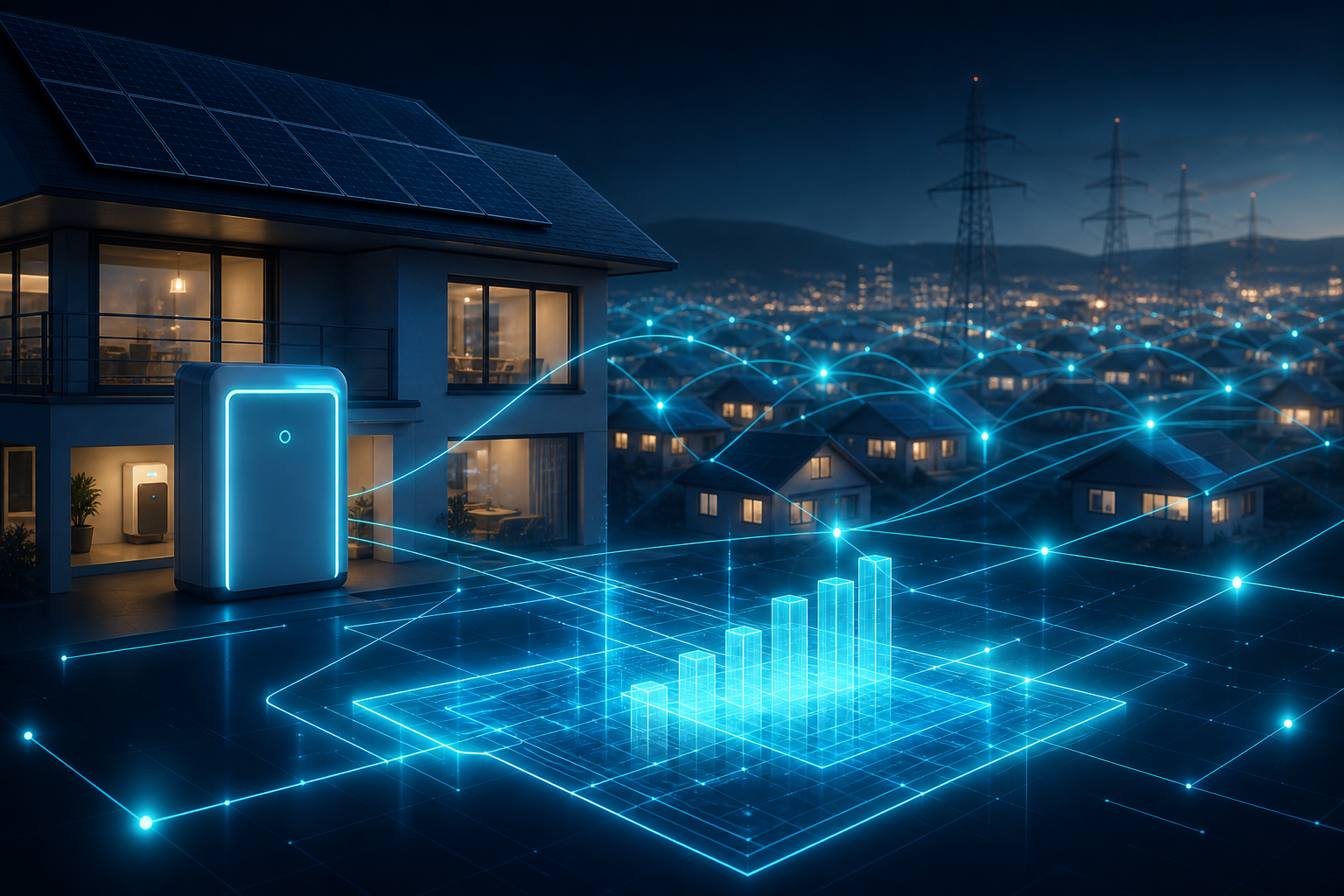
The key here is coordination. Individual devices are in different locations and belong to different people, but a digital network can coordinate their actions. At the right moment it sees available resources and directs them where they bring benefit.
This is how distributed energy infrastructure emerges. It’s built not around one huge storage, but around many smaller resources already owned by individuals.
For the homeowner, this changes the perspective on the battery itself. It stays part of the home, continues supporting energy independence and performing familiar tasks. But at the same time, it can become part of a larger system.
## From reserve owner to infrastructure participant
Usually a person sees themselves as an electricity consumer. They get power from the grid, pay for it, and try to use it wisely. Solar panels and a battery add another role: now they can produce and store some energy themselves.
A distributed network opens the next step. Personal equipment can not only serve one home but participate in creating shared useful capacity.
Here comes the key insight: **a home battery can be not just a device waiting for an outage, nor only a resource for one utility program. It can become an owner’s part of a working energy infrastructure.**
At the same time, the person doesn’t stop being a homeowner or become an energy company. They simply provide the system a useful opportunity of their equipment and receive compensation for the work done.
This is a different way to look at an already made purchase. It’s not just home electronics or a way to save money. It’s a physical asset capable of creating value beyond a single home.
This logic is easy to imagine on a simple household level. If many people already own equipment that isn’t used all the time, there’s no need to build a completely new facility first. Existing resources can be coordinated — creating infrastructure shared among participants.
## The battery stays yours, but its role grows
In the familiar model, the path looks straightforward: there’s a home, a battery, and an energy supplier. If the supplier offers a participation program, the owner may join. If not, it seems like there are no options.
But digital distributed networks offer a broader picture. They can unite owners’ physical assets themselves and account for the useful work of each participant.
The focus of this model is not an organization owning all the equipment. On the contrary, the devices stay with many people. Coordination is shared: the network helps individual resources act together.
Thanks to this, the home battery gains another possible role. It can still be a backup, store solar energy, and help the home use electricity more independently. To these tasks is added a new one: providing free capacity to the distributed system and earning rewards for real value delivered.
This doesn’t negate the original point of purchase. It expands it.
## A new perspective on personal energy
Home energy is gradually becoming more than just a matter of own consumption. The owner has equipment that can bring benefit beyond the home. Solar generation creates energy, the battery stores it, and digital coordination allows many personal devices to work together.
As a result, the role of the person changes. They are no longer only end consumers or just owners of emergency reserves. They can participate in infrastructure created from resources of many ordinary owners.
Behind this idea is a separate world: digital networks that connect physical equipment, find useful work for it, and distribute rewards among participants. Home batteries are a clear way to see how a personal asset can become part of a common system.
The natural next question is how such networks are arranged and what role equipment owners can play. You can continue exploring this new infrastructure world at DEPIN WORLD.
Explore more on DePIN World →