Your main job can be familiar, understandable, and even beloved. But sometimes a single salary is simply not enough to feel secure.
This is not necessarily a reason to quit or start over. Often, the goal is to keep what you already have and gradually build another source of income alongside it — one that is more independent and less dependent on a single employer or major client.
At first glance, the options are familiar: taking on orders after work, doing side gigs on weekends, offering services, starting a small business, or investing spare money. But there is another path, discussed far less often.
Traditional ways require time or capital
Most additional income options hinge on personal involvement. A craftsman takes clients in the evenings, a driver works extra shifts, a teacher holds weekend classes, and a designer or programmer takes on another project.
These methods are clear and can indeed be effective. But they share a common trait: to earn more, a person usually has to give more of their time. The workday ends — and the second shift begins.
Owning a business or creating a digital product lets you build something of your own but requires clients, sales, marketing, and constant attention from the owner. Investments don’t turn every evening into work hours but do require accumulated capital.
So, it’s the familiar crossroads: sell your time again or use money you’ve already saved.
But what if the map of possibilities doesn’t end there?
Not another job, but a working resource
You can receive reward not only for new working hours or invested money. Useful work can be done by a resource a person already owns.
Modern digital services need real infrastructure: computing power, storage space, connectivity, data transmission, sensors, and equipment to collect metrics. Users usually see only the finished result, while everything supporting its operation remains behind the scenes.
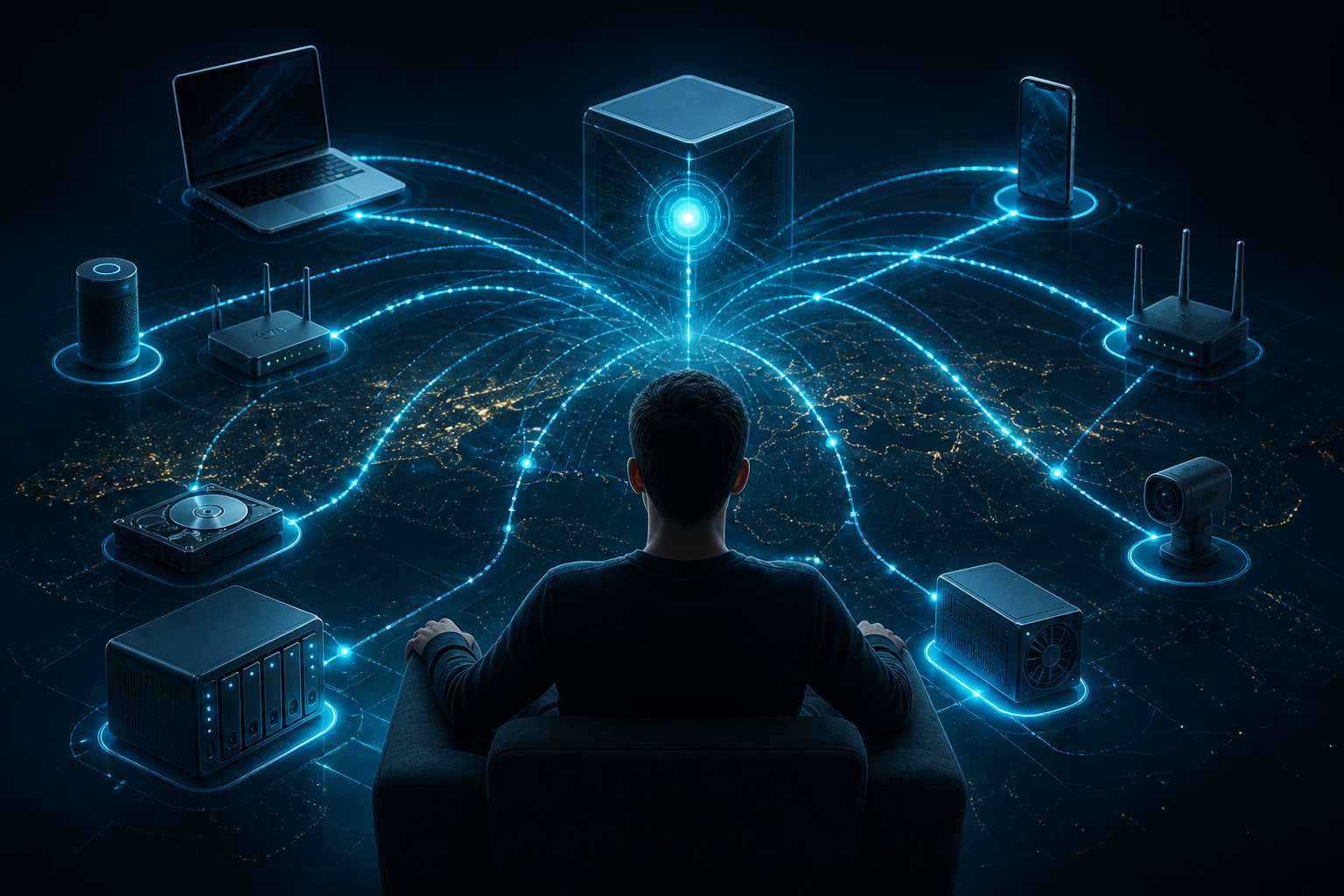
But parts of this infrastructure don’t have to belong only to large companies. Their owners can be ordinary people too. A person provides their resource to the network, the network performs a demanded task, and the owner receives reward for this useful work.
The main change is in the person’s role
Usually, we participate in the digital economy as clients: paying for services, storing files, watching videos, and using apps. Here, there’s a different role — not just consuming infrastructure but also providing part of it.
This resource can be computing power, free storage space, a communication device, a sensor, or another physical component the network needs. The specific type of equipment isn’t as important as the principle: a resource owned by a person performs a useful function within a larger system.
This doesn’t mean there are no responsibilities. Equipment needs to be connected, configured, and maintained in working order. But the connection between time and income works differently: the owner doesn’t have to personally deliver a new service for every client each time.
Additional income doesn’t have to be a second job. It can come from owning a useful resource that works as part of a digital infrastructure.
An independent stream alongside your main job
This approach doesn’t require instantly quitting your profession or turning every free minute into a paid hour. Alongside your usual work, another role gradually emerges — the owner and provider of a useful resource.
At the same time, the internet stops being just a territory where a person can only act as a client, subscriber, or service provider. They can participate more deeply — by providing what digital systems cannot operate without.
A single resource can be small. But the network combines many such parts into a functioning infrastructure. This principle is what decentralized physical networks, or DePIN, are based on.
The first practical question here is not “what to urgently buy?” but “what do I already have and can it be useful to the network?”. This begins the section “Use what you already have”: a computer, free disk space, internet connection, or other equipment should be evaluated first before making decisions.
Another door, not a replacement for everything else
Freelancing, services, small businesses, digital products, and investments are not going anywhere. This new model doesn’t cancel them — it expands the options.
Now, instead of asking “where can I find another gig?”, you can ask a different question: “Which useful part of the digital infrastructure can I own?”
There are more answers than might appear at first glance. Different resources perform different tasks, and ways to participate vary significantly. But first, it’s enough to see the main point: an ordinary person can be not just a user of a digital system but an owner of its working part.
This is where your introduction to DePIN World begins — a space where they clearly explain what resources can work in digital networks and how such participation models are structured.
Not to rush into buying anything right away. But to calmly consider another door that may previously have been simply invisible.