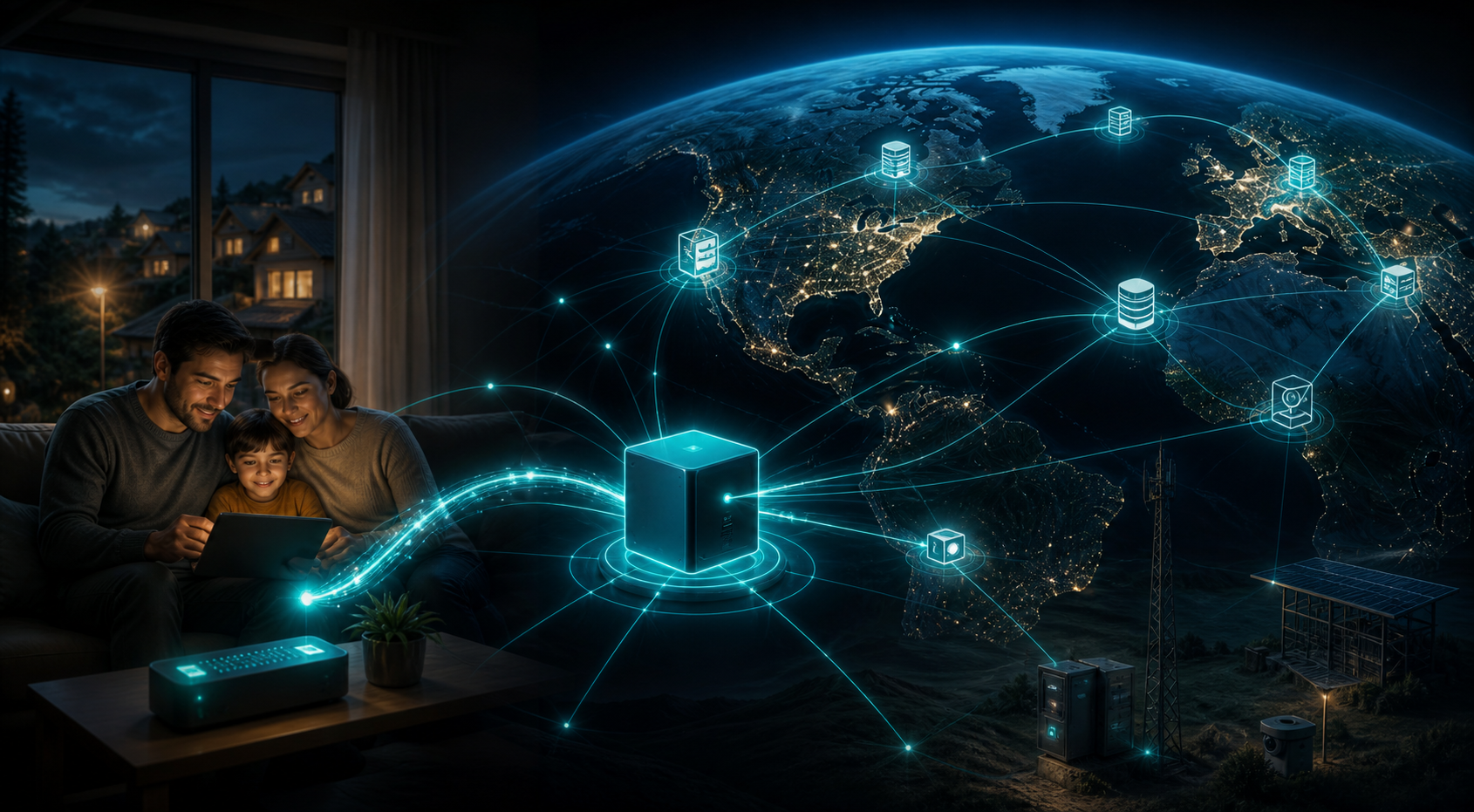
At home, everything is close again: family, familiar streets, ordinary conversations around the same table. After months or years abroad, this feels especially intense. There’s no need to maintain closeness through brief calls or wait for the next meeting.
But with the return comes another kind of gap. The person is back home, but their previous income remains on the other side of the border.
Local jobs often don’t allow supporting the family as before. Leaving again may bring back familiar earnings — but it will take the person away from home once more. This painfully familiar choice arises: either be close or earn where your labor is valued more.
What if this map of possibilities is incomplete?
Familiar Paths After Returning
The first decision is usually obvious: find work at home and accept the local salary level. It’s a clear and straightforward route. It restores a stable routine but doesn’t always maintain the level of family support that was possible thanks to working abroad.
You could start a small business. Turn accumulated experience, connections, or savings into a store, workshop, or service. This option provides more independence, though it still requires constant personal involvement.
There is also remote work. English skills, professional expertise, and experience of living abroad can be used to find foreign employers or clients. Then the person stays home but continues accessing a broader market.
Some try to use property left abroad. Some work through acquaintances or intermediaries. And others pack their bags again after a few months because they see no other way to regain their previous income.
None of these paths is wrong. For many, one of them really is the solution. But almost all share one common trait that’s easy to overlook.
Income is still tied to personally selling one’s time, skill, or presence.
When Income Follows the Person
Work abroad brought money not just because the person was in another country. More importantly, their hours and effort were bought by a wealthier market.
As long as they came for shifts, fulfilled orders, or provided services, the connection to that market remained. After returning, it was broken. Experience, discipline, and ability to work didn’t disappear. What changed was the point at which that labor could be sold at the previous price.
Remote work partially solves this issue. Borders no longer require physical relocation: work can be done at home and delivered via the internet. But the basic premise remains. There is an employer or client, there is a task, there are working hours. To generate income, the person must complete another job for someone again.
Even small businesses often revolve around the owner's personal presence. Decisions need to be made, clients talked to, processes overseen, and someone has to be there in person. Formally, the person works for themselves, but their time remains the main productive resource.
Therefore, the question usually sounds like this: where and to whom should I sell my labor now?
However, it can be posed differently.
Does income have to come only when a person personally completes another task?
Not Just a Worker, but an Owner of a Useful Resource
The digital economy constantly requires infrastructure — the foundation on which services run and that other people use. It needs computing power, storage and data transfer, connection to the physical world, and other valuable resources.
We usually think of such infrastructure as something distant and owned by large companies. Somewhere there are big centers, equipment, and specialists, while ordinary people either use finished services or work for one of the organizations managing them.
But there is another model. Parts of the digital infrastructure can be owned and managed by ordinary people. Their resource connects to a wider network, performs useful work for it, and the owner receives compensation for it.
This is an important shift in role.
A person participates in the digital economy not only as an employee, performer, or service seller. They become an owner of part of what helps that economy operate.
In this model, value is created not only by the person’s own working hours. It is created by the physical or computational resource that they own.
The Resource Can Work Where the Owner Lives
This is where a possibility often missing from the usual returnee’s map emerges.
To participate in a broader market, it’s not always necessary to cross borders again. It’s not essential every day to look for a foreign client and sell them another hour of your labor. You can own a resource that does useful work for a digital network.
The person stays at home.
Their place of residence and the space where the resource is used no longer have to match. The family can be close, while the resource’s output serves people and digital services far beyond the city or country of the owner.
A similar logic is easily seen in everyday life. The owner of useful equipment gains value not because they perform its function manually every minute. The resource and the work it can do matter. The digital economy expands this idea: a useful resource can become part of a large distributed infrastructure.
This changes the very question about earning after returning.
Instead of the single search — “who to offer my hours to now?” — another arises: “what useful resource can I own and what work can it perform for a broader digital market?”
This does not exclude employed work, remote services, or one’s own business. The new model doesn’t have to replace familiar ways of earning. It just adds one more role that the person might not have seen before.
You can be not only someone who works within another system, but also someone who owns part of that system’s infrastructure.
A Different Form of Economic Mobility
Economic mobility is usually linked to the person’s movement. To access a stronger market, they move to where demand for labor is higher and pay is better.
The digital infrastructure offers a different view of mobility. It’s not the person who crosses borders, but the value created by the resource they own. The owner stays in their chosen place, while the resource participates in the work of a broader digital space.
This is the key discovery: connection to the global economy is possible not only through migration and not only through remote selling of your own hours.
Sometimes that connection comes through owning a useful resource.
For someone who returned home and doesn’t want to part with their family again, this changes not the ready answer but the entire set of available answers. Between “accept local wages” and “leave again” there is an additional door.
Behind it lies a world where ordinary people can not only use digital infrastructure or work for its owners but also own parts of it, providing useful resources to the networks.
The next natural step is to see what forms such infrastructure takes, what work it performs, and how people participate in it. You can start with the section “Use What You Already Have”: it helps evaluate available resources before new purchases.
For other models of participation in digital infrastructure, read on DePIN World.