You need your car every day. To get to work, drop off your child, stop by the store, or run errands on the other side of town. It’s hard to do without these trips, but each one costs money: fuel, maintenance, consumables, and inevitable wear and tear.
It’s only natural to wonder: if the car is used so much, can it at least partially offset the costs? Usually, the answer comes down to taking on extra work. You could take taxi fares, do deliveries, or spend a few more hours behind the wheel. But not everyone wants to turn an already busy day into another shift.
A car doesn't always need another ride to make money. Sometimes it's enough to take a fresh look at the rides that are already happening.
The car gets a lot of use, but it mostly costs money.
A personal car is one of the resources people use most frequently. It regularly travels around the city, drives down the same streets, goes to different neighborhoods, and helps its owner handle everyday tasks.
However, from an economic standpoint, its role is usually one-sided. The car transports a person, but at the same time costs money. The greater the distance traveled, the more noticeable the expenses.
People usually try to change this in two ways.
First, save money: choose more affordable services, cut back on non-essential trips, and keep an eye on fuel consumption. This helps reduce the burden, but it doesn't change the car's role itself.
The second option is to make the car generate income. However, this almost immediately brings in taxi, delivery, and other on-demand services. The car does indeed start to earn money, but the owner has to put in extra work as well. You have to set aside time, accept a job, plan a route, and drive a distance that you wouldn’t have had to cover without the job.
It boils down to a simple trade-off: the more hours and miles you drive, the more opportunities you have to earn money. For someone who already drives a lot, this isn't always the best solution.
There is also a simpler option—a small reward for logging routes within a specific mapping system. But even this is often seen as a local perk offered by a particular platform, rather than a fundamentally new role for the car.
This is exactly where the familiar map of possibilities falls short.
Even an ordinary trip can be beneficial
Imagine a typical morning. You get in your car and drive to work along a familiar route. No additional requests, no passengers, and no specific streets chosen. It’s a trip that would have happened anyway.
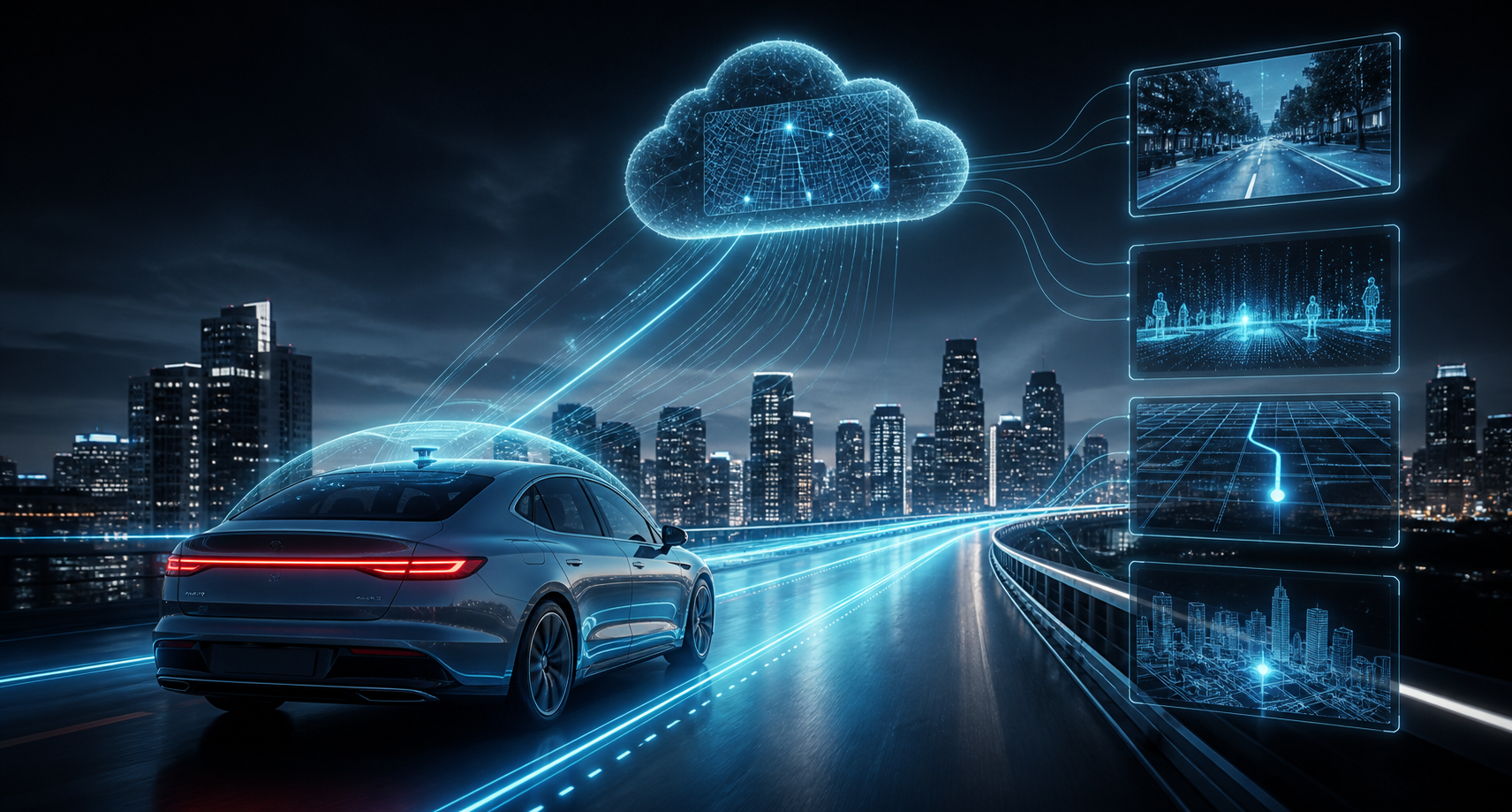
As the car moves, it travels through real physical space: passing along roads, through intersections, and through neighborhoods. As it moves, a stream of observations emerges about what is around it and how the urban environment is changing.
The digital world needs this kind of information. Maps, services, and other systems cannot exist solely within computers. To reflect reality, they need data from the real world—data that is up-to-date, regularly updated, and collected from various sources.
Typically, a driver doesn't view their trip as a source of this kind of data. To them, it's simply a journey from one point to another. But if you separate the mileage itself from the idea of additional work, the picture changes.
The person is already moving around the city. The car is already where the digital systems need to monitor it. The route already provides an opportunity to collect useful information.
So, value may not lie solely in a passenger being transported or an order being fulfilled. The very fact that a vehicle is moving through the real world can be valuable.
The car's second shift—without a second driver
This is where another opportunity arises.
A car can be viewed not only as a means of transportation, but also as a mobile component of the digital infrastructure. During a typical trip, it can help collect and transmit relevant information about the surrounding area.
The main change isn't to the route, but to the role of the owner.
In the taxi or delivery industry, a person becomes a task performer. The platform tells them where to go and what to do. Income is generated through new work that didn’t exist before.
In the infrastructure model, things are structured differently from the very concept itself. A person already has a physical resource—a car. There is regular mileage. There are routes that the person drives anyway. This resource can simultaneously perform another useful function for the digital network.
The trip remains your own, but it takes on a second purpose.
You’re still heading to work, to the store, or running personal errands. The car is performing its usual task—taking you where you need to go. At the same time, it can contribute to the creation of digital data, and the owner earns additional income from the value of that data.
This doesn't mean turning every free hour into a new shift. You don't need to look for a passenger or make up an excuse to drive further. It's a different approach: taking advantage of existing traffic in both directions.
This is precisely the key insight. For a car to begin performing economically useful work, the owner does not necessarily have to become a professional driver. Sometimes value is created by the resource itself—one that is in the right place and performs a function that benefits the network.
Not a route bonus, but a new ownership role
At first glance, it’s easy to mistake all of this for just another reward for the trip. But there’s more to it than that.
In this model, a car ceases to be merely a personal possession that requires ongoing expenses. It takes on an additional productive function. Its mobility, presence on the streets, and ability to interact with the surrounding environment become useful not only to the owner but also to digital systems.
The role of the individual is also changing. He is no longer merely a user of someone else’s app or someone who carries out tasks on a platform. He owns part of the physical infrastructure on which the digital infrastructure can rely.
This is a different perspective on familiar property.
Infrastructure usually seems like something big and distant: it’s built by large companies, cities, or specialized organizations. But digital networks may require resources that are already distributed among millions of ordinary people. Machines, sensors, and other devices are found in homes and on the streets, and they travel along familiar routes every day.
When their valuable work is combined, an infrastructure emerges that is not created solely by large, centralized systems. The owners of the physical resources themselves participate in this infrastructure—and receive compensation for their contribution.
A familiar trip starts to look different
After that, even a familiar route can look different.
In the past, it meant nothing more than another expense: a little more fuel, mileage, and wear and tear. The opportunity to earn money arose only when a new job was added to the route.
Now, an additional option is emerging between these two alternatives. A trip you’re already taking can be not only a personal journey but also a valuable contribution to the digital world. Your car remains your means of transportation, but at the same time, it becomes a part of the infrastructure that you own.
That doesn't change why you got behind the wheel this morning. What changes is your understanding of what else your car is capable of along the way.
And if such a possibility exists for a car, it naturally sparks broader interest. What other everyday resources that people own could be used to build digital infrastructure? How do car and sensor owners become not just users of services, but the ones who provide the physical foundation for them? What does a world look like in which familiar forms of ownership take on a second, productive function?
GUIDE to DePIN WORLD continues this map: from cars and sensors to other physical resources that ordinary owners can connect to the existing digital infrastructure.
Explore more on DePIN World →