When someone buys their first truck, they’re often buying more than just a vehicle. They’re buying independence.
You no longer have to work just for someone else’s business. You can find your own jobs, plan your routes, and gradually build a family business. Your truck becomes your own asset—one that will support your family today and provide a foundation for the future.
But over time, independence can turn into a different kind of dependence. To keep the truck and continue making loan payments, the owner has to spend more and more time behind the wheel. Every trip brings in revenue, but that revenue has to cover diesel, tolls, maintenance, and mandatory payments. After that, there needs to be money left over for the family’s day-to-day living expenses.
I don't want to sell the truck at a loss. I can't stop working. And as the kids watch this way of life, they see less and less of a future in the family business.
All the familiar solutions lead back to the road
When revenue from freight transportation declines, the owner usually asks a logical question: Where can I find more profitable cargo?
You can look for a regular client, change your route, switch to shorter trips, or take on specialized jobs. You can accept a broker’s rate, as long as the truck isn’t sitting idle. You can have another driver take the wheel, hand the truck over to an operator, or put it back into service.
All of these methods exist for a reason. They are easy to understand, familiar, and, in many cases, remain an important part of the transportation industry.
However, they share one thing in common: a truck only generates revenue as a carrier.
To make money, you still need a booking, a shipment, a route, and a driver. The vehicle has to hit the road, use fuel, and deliver the goods, while its owner must accept a fare that is largely determined by other market participants.
The cargo changes. The distance changes. The customer or the driver changes. But the formula itself remains the same:
flight — fare.
Because of this, the options seem very limited. We either need to find a more profitable job for the truck, give it to someone who can use it more effectively, or sell it.
But this isn't a complete list of features.
Another question about a car I'm familiar with
The truck owner is used to thinking about his vehicle in terms of transportation. That's why he asks: What else can I haul with it?
What if we change the question itself?
It's not just, "What kind of cargo can my truck carry?"
But also: “What other useful work can a physical asset that already belongs to me perform?”
At first glance, the difference seems minor. In reality, it completely changes how you view the truck.
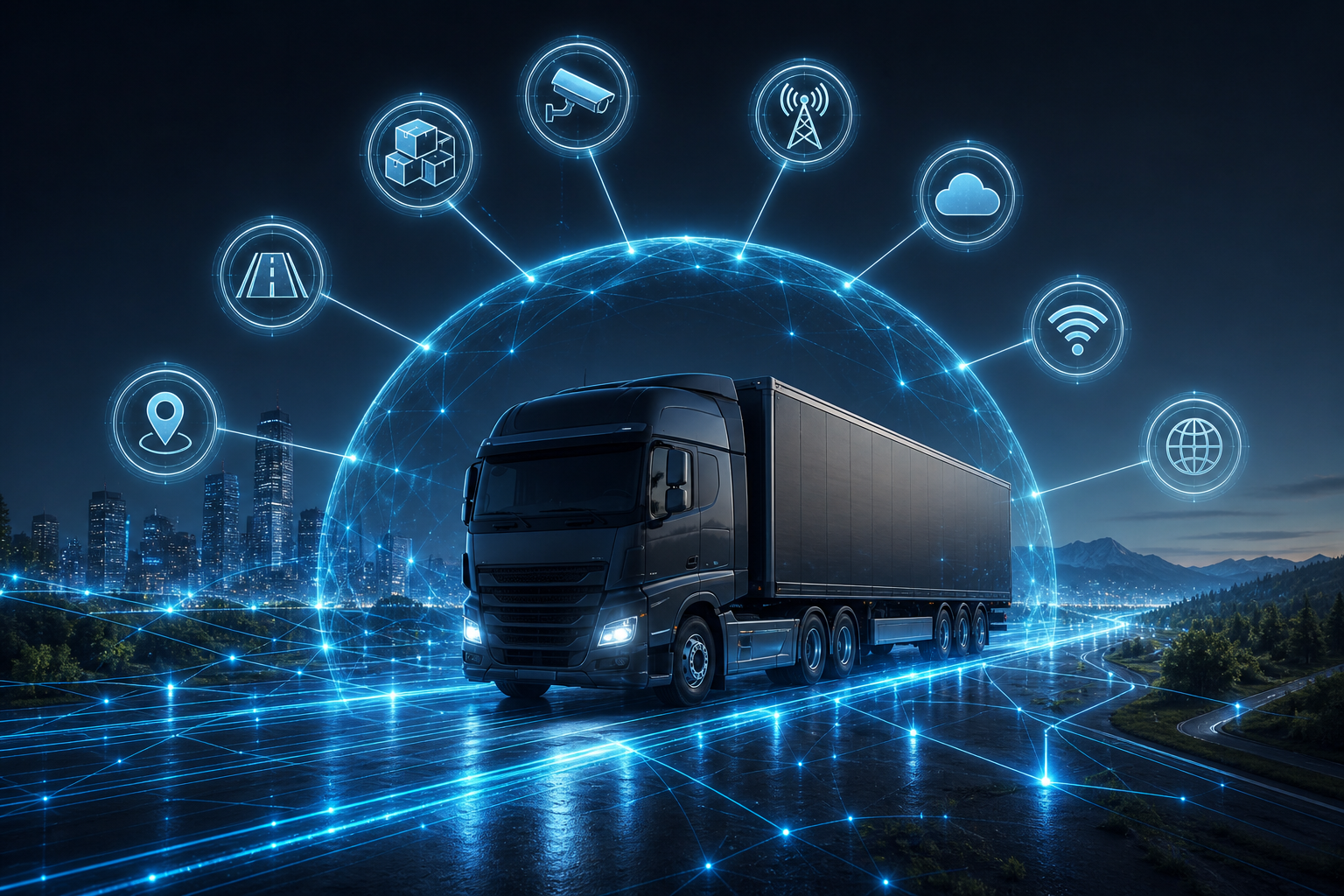
A truck is more than just a body, an engine, and the ability to transport goods from one place to another. It is also a mobile platform owned by a person. It exists in the physical world, moves between different locations, and can serve an additional useful function.
This feature is not intended to replace transportation. It can operate alongside it.
This is where the fourth option comes in: don't sell the truck, don't give up your regular job, but consider the truck as part of a different infrastructure.
The machine can perform two roles at once
We’re used to thinking of infrastructure as belonging to large companies or the government. They build systems, install equipment, manage networks, and generate revenue from their operations. The average person is usually just a user: they pay for communication, access, data, or other services.
But there is another way of looking at it.
Useful infrastructure can consist of a variety of physical assets owned by different people. Each participant provides the network with a specific resource, and the network brings these individual parts together into a functioning system.
Such a resource could be a physical presence in the right locations, movement between them, the ability to collect or transmit useful digital information, maintain coverage, or perform another task that cannot be accomplished solely within a computer. A digital system still needs a connection to the real world—to roads, cities, distances, and moving objects.
The truck is already in this real world. It regularly goes to places where a digital network might need a physical medium to perform a useful function.
Therefore, the vehicle is capable of fulfilling two roles simultaneously. It continues to transport cargo, but at the same time can provide an additional physical or digital resource. In this model, compensation is no longer tied solely to a specific delivery, but also to the asset’s other uses.
Here's the key point: a truck doesn't necessarily have to create value only when it's carrying paid cargo. It can simultaneously be part of another useful infrastructure.
This is a continuation of the familiar logic of ownership
This idea is nothing new to someone who has owned a car for many years.
He already knows what it means to invest money in a physical asset. He knows that property needs to be maintained in good working order. He knows that income comes from the useful work that property performs. And he understands the difference between owning his own car and working on an asset that belongs to someone else.
The new model does not contradict this logic. It expands upon it.
Ownership remains with the owner. A truck remains a truck. Transportation services aren’t going anywhere. But the vehicle’s usefulness is no longer limited to a single task—transporting someone else’s goods for a set fee.
This is an important shift in perspective. Previously, a truck was viewed as an asset with a single economic role. Now it can be seen as a platform capable of performing several types of useful work.
In that case, the question of the future of the family business takes on a different meaning. You don’t necessarily have to choose between a new route, transferring the truck to another operator, or selling it. You can keep the truck and add an additional function to it.
Infrastructure Owned by Ordinary People
Beyond this opportunity lies a much broader world.
In this model, ordinary people participate in the digital economy not only as consumers of services. They can own physical components of utility networks: provide resources they own, maintain their operation, and receive compensation for their actual contribution to the overall system.
Some people participate using a stationary device. Others use a mobile device. In one case, what matters to the network is presence in a specific location; in the other, it is mobility, accessibility, or the connection between the digital system and the physical world.
What makes the truck particularly interesting is that it is already a working asset. There’s no need to imagine it as something completely different. It’s enough to stop seeing it merely as a means of transportation.
This opens up a new logic of ownership: the same physical object can provide benefits in multiple ways, and its owner can participate in building infrastructure that previously seemed accessible only to large organizations.
The next step is to develop a clear map of this world: what resources ordinary owners can provide, why digital networks need them, and what value people receive in return.
This is exactly the kind of map that GUIDE to DePIN WORLD. Here, the journey begins not with complex technologies, but with a simple question: what else can an asset that you already own do?
To compare this with another mobile application, consider how the same logic works with a regular car: a car can run even when you’re just driving around running errands.
Explore more on DePIN World →