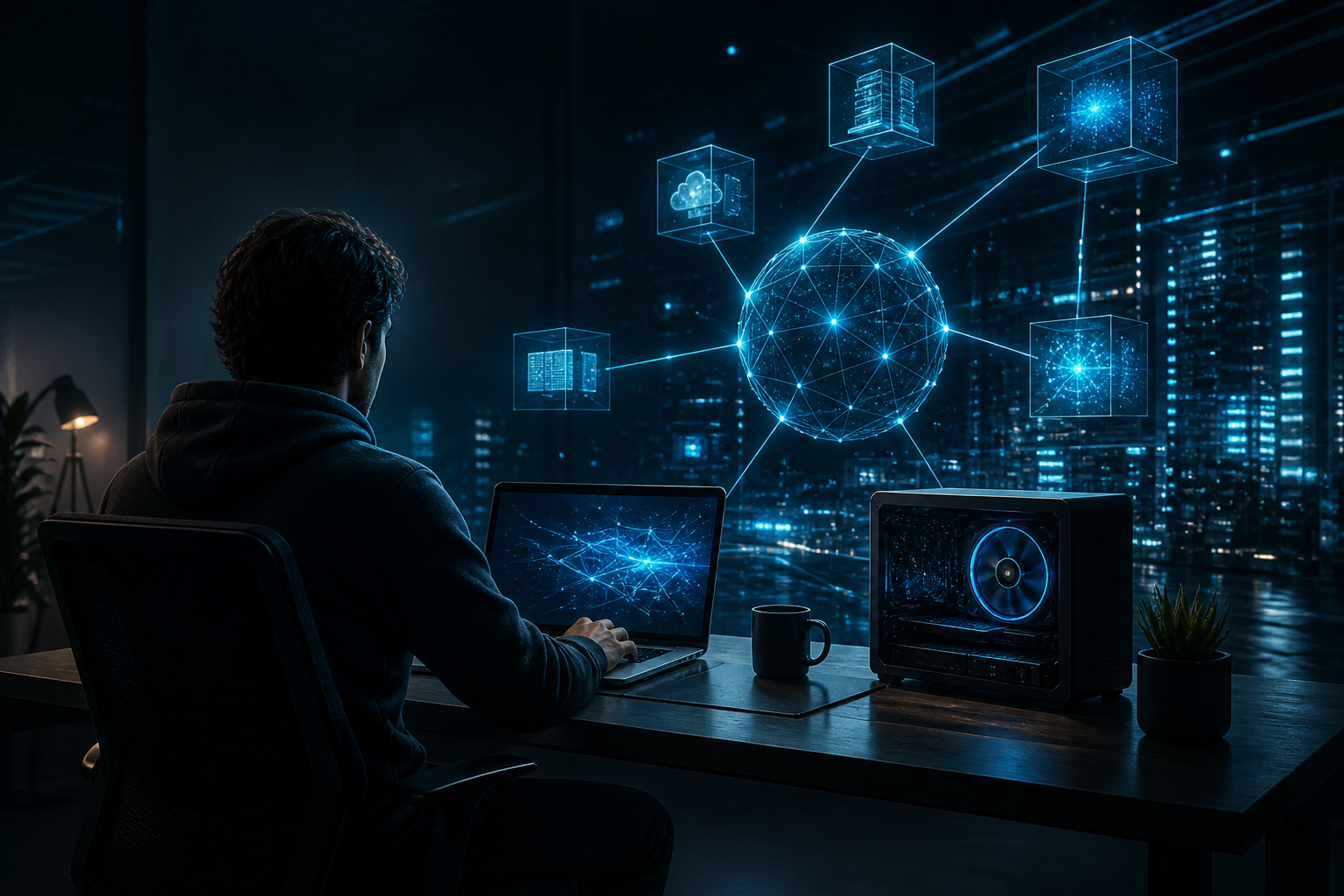
Independence often starts with a simple desire: to choose your own projects, working hours, and lifestyle—without a boss, a mandatory office, or someone else's schedule.
But for a French freelancer or self-employed professional, freedom often goes hand in hand with a different reality. One month there are plenty of assignments; the next, there are gaps between projects. A few regular clients provide a sense of stability—and at the same time create a new dependency. If one of them leaves, it immediately affects your income.
I don't want to go back to being an employee. But constantly living in anticipation of the next job isn't the kind of independence a person seeks when they start working for themselves.
Свобода, которую приходится постоянно подтверждать
An independent professional does not have an employer, but his or her income is still dependent on the decisions of others.
The client must choose this one. Agree to the proposal. Approve the budget. Sign the contract. Accept the work. Pay the invoice.
While all this is going on, a freelancer isn’t just doing their main job. They’re looking for new contacts, responding to inquiries, negotiating, updating their portfolio, and reaching out to former clients.
This creates a strange situation: a person left their job to have more control over their time, but now finds themselves having to regularly sell that time on their own.
When you want to increase your income, the usual approach offers some straightforward options:
- найти ещё одного клиента;
- взять дополнительный проект;
- выйти на платформу с разовыми заданиями;
- добавить новую услугу;
- создать цифровой продукт;
- совместить фриланс с частичной занятостью.
All of these options can be helpful. But almost every one of them requires the same thing: investing more of your personal time. You’ll need to do more work, hold more meetings, prepare more materials, or manage yet another area of activity.
Even a digital product that can be sold repeatedly must first be conceived, created, designed, and marketed. Earning extra income once again starts with putting an extra burden on the individual.
Возможно, вопрос поставлен слишком узко
The search for a new source of income usually begins with the question:
«Какую ещё работу я могу выполнить?»
For a freelance professional, this is only natural. They are used to earning money through their knowledge, experience, and time. Their professional value translates into a service, and that service translates into payment.
But we could ask a different question:
«Какой принадлежащий мне ресурс уже способен выполнять полезную работу?»
For many freelancers, this resource is right on their desktop. The computer is seen first and foremost as a tool: a designer creates layouts on it, a developer writes code, an architect builds models, a video editor puts together clips, and a consultant communicates with clients.
That said, a computer is more than just a screen, a keyboard, and a set of programs. Inside, it has computing power. It is capable of processing data and performing digital tasks.
And this power can be useful not only to the device's owner.
Компьютер как работающий ресурс
Modern digital networks require actual physical resources. All data must be stored somewhere, all computations must be performed somewhere, and digital services must run on something.
Usually, people only see the end result. They open an app, download a file, run a program, or use an online service. The infrastructure that makes all of this possible remains behind the scenes.
But even an ordinary person can become the owner of a small portion of such infrastructure.
The basic idea is simple: he provides the network with the computing power of his own equipment. The network uses this resource to perform useful digital tasks, and the owner receives compensation for making it available.
With this model, you're not paying for a new logo, another consultation, or an extra hour in front of the screen. The website itself does the real work.
Здесь и возникает главное открытие: доход может быть связан не только со следующим клиентским заказом. Принадлежащее человеку оборудование тоже способно участвовать в полезной работе и создавать ещё один поток дохода.
This doesn't change one's profession, but rather one's perspective on what one already knows.
The computer remains a work tool, but at the same time is beginning to be viewed as a small, productive digital resource. Its value now lies not only in what the owner does with it, but also in the tasks that its computing power is capable of performing on its own.
Для владельца мощной видеокарты это можно проверить практически: DePIN Lite — Sleeping Gamer показывает, как уже имеющийся компьютер может использовать свободные часы для полезной вычислительной работы.
Не только исполнитель, но и владелец части инфраструктуры
Most people participate in the digital economy as users. They pay for connectivity, cloud storage, subscriptions, and access to various services. Even if their entire professional life takes place online, the infrastructure itself usually belongs to someone else.
The ability to provide one's own network equipment changes this role.
A person remains a freelancer, designer, developer, consultant, or small business owner. But alongside this familiar role, another one emerges: the owner of a physical resource required by a digital system.
The difference may seem small, but it makes a significant difference.
A contractor is paid for their own work. A resource owner is paid for the useful work performed by the equipment they own. In the first case, a new payment usually requires a new task. In the second case, the source of value is the available computing power.
This isn't just another side job you have to squeeze in between your current projects. And it isn't just another service for which you'll have to find clients. It's a distinct way to participate in the digital economy—by owning a functioning part of it.
For an independent person, this idea comes especially naturally. They are already accustomed to making their own decisions, managing their own tools, and not tying their entire future to a single employer. Now, this independence can extend not only to their work but also to the digital resources they own.
Ещё одна дверь вместо ещё одной смены
When there's some free time between jobs, the first thought that comes to mind is often the same: I need to find some extra work.
But availability isn't the only asset a freelancer has. They also have equipment, access to digital platforms, and resources that may be in demand by the network.
And so, the familiar map of possibilities expands.
Additional income no longer necessarily means a new client, another project, or an evening shift on the platform. It can arise alongside one’s main line of work—thanks to a resource that a person possesses and that can benefit the digital infrastructure.
This is yet another level of autonomy. It’s not about having to work more, but about the opportunity to view your own equipment in a different light: not just as a means of fulfilling orders, but as part of a larger, functioning system.
A whole new world is already taking shape around this idea, one in which ordinary people are no longer merely users of digital infrastructure. They provide networks with their own physical resources and become owners of small parts of that infrastructure.
GUIDE to DePIN WORLD — следующий шаг для знакомства с этим миром: с тем, как личное оборудование превращается в полезный сетевой ресурс и какие формы такого участия существуют. Потому что иногда новый источник самостоятельности начинается не с вопроса «где взять ещё один заказ», а с неожиданной мысли: «А что из того, чем я уже владею, тоже может работать?»
Explore more on DePIN World →